Student/Teacher/Performer/Admirer: A Correspondence with Ramona Kelley of Twyla Tharp Dance
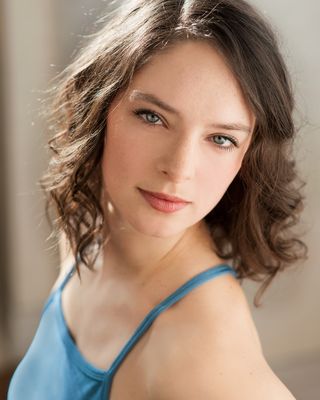
Many years ago, dancer Ramona Kelley was a student of mine in a teen modern class in Berkeley, California. Over the years, it has been exciting to see her head off to college at NYU and then launch into a professional career. Ramona merges technique and joy onstage and is magical to watch. Knowing that she will come full circle and be back in Berkeley in October 2015 to perform with Twyla Tharp at Cal Performances at UC Berkeley, I thought it would be fun to correspond over a few months prior to the performances. This correspondence, shared on the blog, offers a window into the world of Twyla Tharp as well as following a young and talented dance artist based in New York City.
Ramona Kelley is originally from California, where she began her training at Berkeley Ballet Theater under the direction of Sally Streets. She is a National Foundation for the Advancement of the Arts (NFAA) scholarship award winner and she holds a BFA in Dance from New York University’s Tisch School of the Arts. Ramona danced the principal role "Betsy" in the North American/Japanese tour of Tharp’s “Come Fly Away.” A current member of Twyla Tharp Dance, she has also worked with Cherylyn Lavagnino Dance, Oakland Ballet Company and The Phantom of the Opera 25th Anniversary Tour among others.
—–
What are some ideas from college you are accessing these days during the rehearsal process (words from your professors, areas of focus)?
There are many different paths taken to become a professional dancer, and the route I chose was to get a B.F.A. in dance from New York University's Tisch School of the Arts. When I moved from California to the East Village in NYC, I didn't necessarily know I was making the right choice for myself or my career. I knew I wanted to go to college, I knew I wanted to dance – and by going to this program, I could do both of these things in a city known for dance. I figured that even if I didn't love the program, I could hopefully meet choreographers and make company connections.
I immediately felt very lucky – the program I chose was a perfect fit for me. My daily dance department classes (Pilates, ballet, modern, choreography, dance history, anatomy, acting, music, yoga…) were on a conservatory level, and I spent my lunch hour taking academic classes in the greater NYU community (Latin, Calculus, Ancient Mythology to name a few). The end result: I learned a lot and slept very little! Even with such a demanding schedule, I didn't want to miss out on any opportunities. I always performed in as many student/faculty works as possible, making my days even longer with late night rehearsals. I needed to learn to work efficiently and very hard – one of the most valuable lessons from my time at NYU.
The NYU dance program is unique in how much freedom it affords its students – some other conservatory programs have set curriculum for their students (at least as freshmen). I really appreciate this opportunity for independence, now as a professional – managing time and focus can be a huge challenge as a freelance dancer. My NYU professors also gave us freedom to find our own individual artistic voices. Some of my classmates had only ballet training, others were already committed to a specific modern technique. I didn't know where I fit in (or wanted to fit in) on this spectrum, but I was supported by my teachers to wear my pointe shoes daily in ballet class AND explore very post modern techniques, as well as choreograph a bit on my own. I cherish the way I was encouraged to keep up with all of these (sometimes contradictory) disciplines because Twyla's work truly requires a bit of everything!
My third and last year at Tisch (the program consists of three years and two summers) I performed in works by guest choreographers William Forsythe and Ron K. Brown. Jill Johnson staged the improvisational Forsythe piece "Room/Room;" the improvisation "technologies" we learned and then performed were invaluable. I have gone back to Jill's exploratory way of moving in many other improvisation situations since, and on more than one occasion, thought of those movement patterns and images when attempting to master a particularly difficult set movement. Performing Ron's piece simultaneously was the ultimate affirmation that artists need "yin and yang" in their lives – the movement styles of these two choreographers could not be more different. And yet, they informed each other dramatically. Learning to be grounded while moving quickly in Ron's African-based movement helped me find my weight more easily in the complicated Forsythe movement en pointe. Both pieces presented movement I initially felt uncomfortable or silly in, but both Ron and Jill were masterful at giving us movement and letting us "try it on" until it settled in our bodies. This is something I still encounter daily when Twyla asks me to try something – I must remember to have patience to let the movement settle and not be afraid of how I look at first.
I am grateful for my time at NYU and have been very lucky to go back and teach occasionally. It is always inspiring to see the incredible and diverse talent of the students, and I try to encourage them to trust their individualities and learn from their differences as my professors taught me.
——–

 Life as a Modern Dancer
Leave a comment