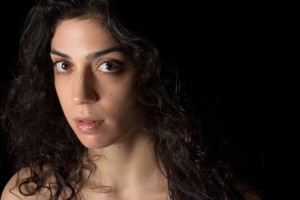
Hometown: Minneapolis, MN
Current city: New York, NY
Age: 32
College and degree: I spent two years at NYU in an accelerated liberal arts program. While there I discovered dance and transferred to an arts school in Chicago called Columbia College where I received a BA in Dance.
Website: http://liabonfiliomassage.com/
How you pay the bills: I am a paid performer and massage therapist.
All of the dance hats you wear: These days I am a dancer, actor, creative collaborator, and video and collage artist.
Non-dance work you do: I own a private massage therapy practice in Manhattan that I call Lia Bonfilio Massage Therapy. Catchy, no? I specialize in maintenance and injury recovery for dancers and musicians.
———————————-
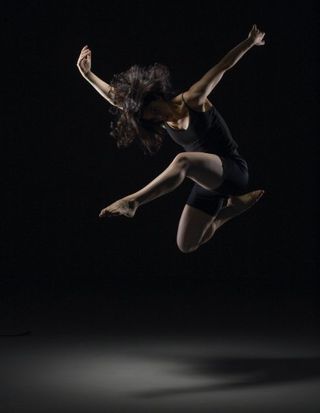
Photo by William Frederking
The first two years after college:
I was hired by Julia Rhoads of Lucky Plush Productions before I graduated from college. This was huge for me. LPP was, and continues to be, one of the most exciting companies in Chicago. There I learned about being in a highly collaborative rehearsal process, about using my voice, and about humor in performance. Shortly after graduation I was asked to join Mordine and Company. Shirley Mordine was instrumental in building the Chicago dance community as it exists now. She taught me an incredible amount about specificity, work ethic, and dance as theater. During this time I also worked as a teaching artist for Hubbard Street Dance Chicago, integrating creative movement into academic curriculum for students in Chicago Public Schools.
Five years after college:
Five years after college I moved to New York City. I began taking class once, sometimes twice daily. It was a terrifying and exciting time. I danced for several independent choreographers and met many beautiful, hard-working artists.
Now:
I am about 9 years out of college now and my dancing life has decelerated significantly. But I must say it is as fulfilling as ever.
I now perform in the Bessie Award winning immersive theater show, Then She Fell, about two to three nights a week.
Major influences:
My major influences have been the choreographers and artistic directors who have treated me with respect and kindness and compensated me fairly. I'm happy to say that they are numerous.
Can you talk about balancing your dance work and your massage work? When did you start pursuing and training in massage?
I entered massage school about four years ago. I was struggling to find the right kind of work to support my dancing. That sentence is upsetting to me because dance is work — and work that requires extensive and expensive training — and should be paid a living wage. But I understand what an entrenched issue that is and many have done a better job than I could parsing it all. Anyhow, massage therapy has been an incredible addition to my life and growth as a human being. I no longer see it as secondary to my performing career.
Can you talk about Then She Fell? Are you still in the production? What do you love about this performance? What challenges you?
I've been with Then She Fell for over two years now and it has been a wonderfully grounding and nourishing experience both personally and artistically. I play two very different roles: the Red Queen and the Doctor. I have performed in nearly 350 shows, which is something I never thought I would get to experience. That kind of repetition takes you on quite the journey. I've been fascinated by the depths it allows. Just when I believe I understand my character fully, something new opens up. It could be just a single word or gesture that suddenly crystalizes, or that the specific gaze of an audience member trips a flood of new information. The show is performed for only 15 people at a time, and we performers are often in a room alone with only one of them. So our scene partners are always changing, and the only things we know about them are what we observe in the moment. I find it pretty thrilling.
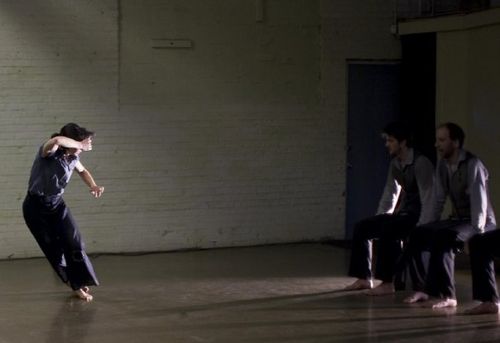
Photo by William Frederking
These days, how do you train and care for your body?
As I think happens with many of us as years go by, Pilates and yoga have replaced the dance class. Training is more about efficiency and maintenance now. I have a wonderful Pilates trainer named Lindy Fines who has helped make it possible for me to keep dancing without pain. I have loosened that fierce grip I had on class-taking for many years, and it has served me well. Two years ago I was diagnosed with an autoimmune disease called Hashimoto's Thyroiditis. Control over my body had become part of my identity, and being forced to slow down and to accept a changed and weaker form was an incredibly difficult but very necessary experience. I'm much more gentle and caring with myself now. And despite what I would have guessed years ago, it has made me a better dancer.
Describe your growth as a performer:
This is inextricable from my growth as a human. The older I get, the more comfortable in my skin, and the more experienced, the richer and fuller my performances become. The less I chase something that might be considered bigger or cooler or more reputable, and the more I value what I have, the deeper I am able to go into embodiment. For me, dance is something I do. It is not who I am. This is important for me because I may not do it forever. I want my true self to shine brightly no matter how I spend my time.
Last performance you saw that really inspired you:
David Neumann's “I Understand Everything Better.” Wow.
Final advice for dancers wanting to move to NYC:
Obstacles abound! But so do opportunities. I say go for it. It's a wonderful place to work hard and to test your edges. It is not a place that encourages a healthy work to life balance, so as long as you are good at taking care of yourself and setting boundaries, there is a rich community here to add to and draw from. Stay curious and patient, and you can make something meaningful here.
———————–

 Life as a Modern Dancer
Leave a comment