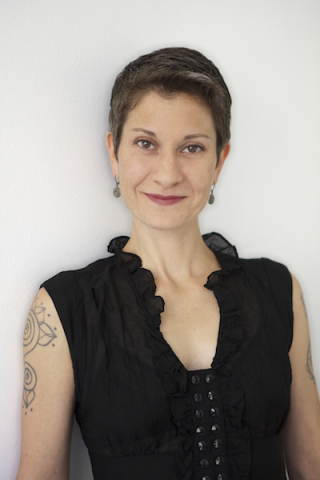
Photo: Evi Abeler
Hometown: Long Valley, NJ
Current city: New York, NY
Age: 43
College and degree: County College of Morris (AA), Rutgers Mason Gross School of the Arts (1 semester), NYU Tisch School of the Arts (BFA). I took a year between high school and college because I had my son , so I took my time getting my BFA as a single mom. I entered NYU at age 23.
Graduate school and degree: NYU Tisch School of the Arts, MFA; completed my MFA at age 26.
Postgraduate work at the New School, Organizational Development and Change Management, in my late 30s
Websites: www.jened.com ifeelsafewhen.com
How you pay the bills: Facilitation, consulting, writing, teaching, project managing, program/process design, performing, movement directing (theater)
All of the dance hats you wear:
- Choreographer
- Movement Director
- Rehearsal Director
- Performer
- Professor (Entrepreneurship, Dance History, Improvisation, Composition)
- Culture Critic
- Facilitator
- Project Manager
- Organizational Development Specialist
Non-dance work you do or have done in the past:
- Writer
- Storyteller
- Spoken Word Poet
- Teacher: Yoga, Meditation, Stress management,
- Healer: Reiki, Minjushri
- Community Builder
- Organizational Development Specialist
- Consultant
- Program Facilitator
- Real Estate Speculator
—————-
Describe your dance life in your….
I have to start by saying that to me dance is in everything – it’s walking down the street, moving through a crowd – it’s how I move in my body when I’m facilitating (a training, a class, a seminar, a rehearsal process) – it’s how I engage with the world. So the following may read more like my life-journey than my "dance journey" – because to me they are one in the same.
20s: In my 20s dance saved my life – quite literally. I had danced throughout my childhood – very seriously. I learned that I was pregnant shortly after graduating high school – and for many reasons – decided to have my son. Frankly, with that decision, I thought my life was over. I started college when he was six months old, as a biology major. In my third semester, I chose to take a jazz class to fulfill an elective. That class woke me up from a dull, depressed, stress-out state and connected me to my body again. My body had been literally stretched and torn apart by pregnancy. The rest, as they say, is history. I happened to be at a community college that had one of the only well-recognized dance programs in the country, in the mid-nineties. I finished a degree, transferred to Rutgers and then to NYU Tisch, showing my choreography in venues like PS122 and University Settlement, throughout my college career. I’ve always been more interested in making than performing others’ work, so I kind of hit the ground running after grad school. I co-founded a collective dance-theater company, called Choreographers Ink. We had the goal of 1) creating and producing two full-length works a year, 2) making a space, and 3) being of service to populations that we were each passionate about. Having lost my mom to cancer when I was 15 years old, the community to which I was devoted was those living with cancer – so I developed a program with Cancer Care. Based on other members’ interests, we also worked with teens, individuals living with traumatic brain injury, and parents of children with terminal diseases. We achieved our goals and worked together, like this, for about two years.
My relationship to dance radically changed September of 2001, when I was 28. I had been following the "path" as an emerging choreographer. I had just received a space grant, and was offered a season at the Joyce SoHo. I was beginning to gather collaborators and performers for my next project. I had recently fallen in love with spoken word poetry and was incorporating text into movement. I had fallen in love with a beautifully complex women – things were falling into place. Then the Twin Towers were attacked and I felt that dance was the most frivolous, irrelevant thing I could possibly do – so I left. I took my son and new lover and moved to New Mexico to study hands-on trauma therapy so that I could be of some use in a crisis. In the coming years, I toured and performed theater and spoken word around the country and abroad, healed others, and developed a new, deeper relationship with my inner-dancing self. I didn’t ‘dance’ again (in a studio or on a stage) until 2008.
30s: In 2008, I was 35 and living in Brooklyn, when my lover, who was by that point my wife, fell in love with someone else. We separated and I headed to the one place I knew would hold me – a dance studio. Once again it was dance-space and the practices I had trained into my body that brought me back to myself. While my relationship with the culture of dance was and continues to be incredibly complicated, the deep connection that the actual practice holds always grounds me. The conflicts I feel around dance have to do with privilege and cost. The cost – time, space, emotional and monetary – is huge if you have a career in dance as it is prescribed by most institutions. The current/consistent elevation of art-for-art's sake and simultaneous dismissal or devaluing of art-for-change/art-for-a-purpose is hurting both dancers and the field. We are bought into a system that disempowers us and leaves us voiceless in the marketplace. When I look at the issue of the "lack of women choreographers" – I do see a lack, but more so, I see a lack of valuing of much (social, political, public, site-specific, community-based) work done by female choreographers. It is hard to be in love with a form that is housed in a system that deems your work "less valuable" because it appeals more to people than it does to the establishment.
40s: In my 40s I have come back to dancing – as a choreographer, movement director, and dancer. I just, one month ago, had my first dance residency at Omi International Dance Collective. It is weird. Like moths to a flame I watch friends, students and other dancers I work with struggle with this form and the system we have silently agreed to participate in. The system continues to make me feel an outsider in a field that regularly turns to me for leadership/processes/answers. My deepest desire is that we/dancers co-create an empowered, equitable values-driven new idea of what "dance" is and the space it can hold in society. I had a taste of that this summer at Omi – it is a beautiful dream.
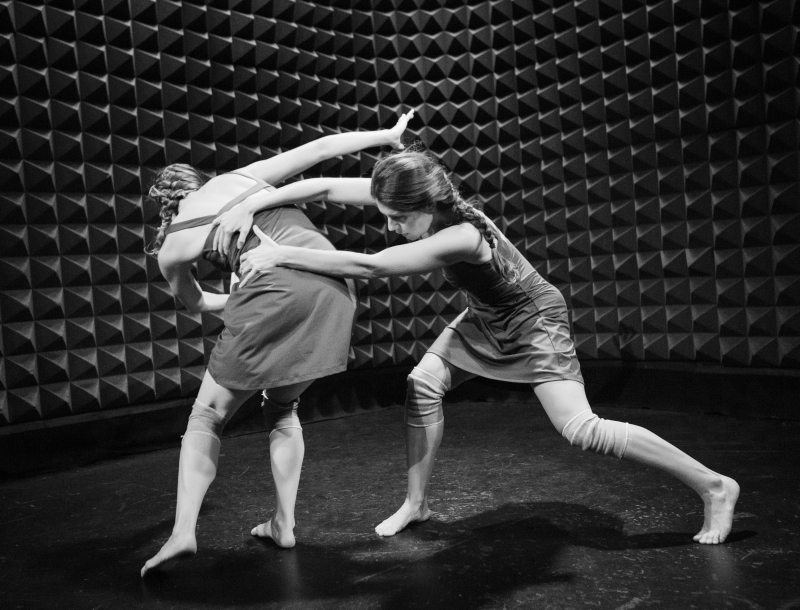
"Cadence" Photo by Yi-Chun Wu
Major influences and mentors:
Gus Solomons Jr., Phyllis Lamhut, Kay Cummings
Can you talk about your experience this summer at Jacob’s Pillow?
This summer I returned, as a Scholar in Residence, to Jacob’s Pillow. I always enjoy working with the Pillow, and this year I was fortunate to be there and be tasked with writing and speaking about an Argentinean company called Che Malambo. This engagement allowed me to learn about a dance form that I knew nothing about (the Malambo) and to research its origins and teach others what I leaned. The short version of a long story is that Malambo traces its roots to West African dance, Flamenco, Russian Cossack dance, Irish step dance, traditional Argentinian folk dance and, in this presentational performance, the structures of western (French) ballet. Malambo and the Pillow offered a beautiful opportunity to engage in conversation about colonization, cultural exchange, the enslavement and persecution of peoples and that history’s role in the dance we see today.
What is on your calendar for the 2016-2017 academic year?
Through January, I will be employed by NEW INC, the New Museum’s incubator for creative entrepreneurship, as their Program Facilitator. This means that I am designing this year’s professional development curriculum and program for eighty projects that lie at the intersection of art, design, and technology. I will be leading some of their trainings in leadership, mentorship, stress management, hybrid business models, and project/self-management. Additionally, I will be in residency at the Georgia Institute of Technology, bringing a collective storytelling and data gathering project titled “I FEEL SAFE WHEN” to the campus in September.
For the last five years my business partner, Sydney Skybetter, and I have co-created a symposium and a series of thinking groups and learning sessions with the Jerome Robbins Foundation. This initiative is called the Lasky Symposium and will continue this year. Lastly, I am developing a training series based on the "Arts and Entrepreneurship" curriculum that I’ve developed for Point Park University and Skidmore College, and taught parts of for Juilliard and NYU, for professors currently teaching in college settings. I hope to role that out in the spring/summer. In that vein, I will be popping up in classrooms, as a guest lecturer on arts and entrepreneurship, at the University of Colorado, Boulder and a few other colleges, still in conversation, this fall.
In your recent Dance Magazine article, you used the phrase “sustainable dance career.” How would you define this?
In several recent meetings, the director of NEW INC introduced me by my title and then added that I am a dancer and choreographer. She stated that she’s seen how this informs the work that I am doing and how I approach the material. Her commentary was unsolicited, and we’d not talked about this prior. It is an example of what I mean when I talk about sustainability + dance + "career." I encourage dancers to never leave the skills we have or the identity of "dancer" at the door. Bring dance into everything – parenting, walking, working, relationship-building – leverage your kinesthetic intelligence on stage and off. We need to broaden our understanding of what dance means – for dancers. The rest of the world values us based on how we value ourselves. We need to craft and own our stories far better. Currently, we are denying ourselves and the world the valuable wisdom we hold.
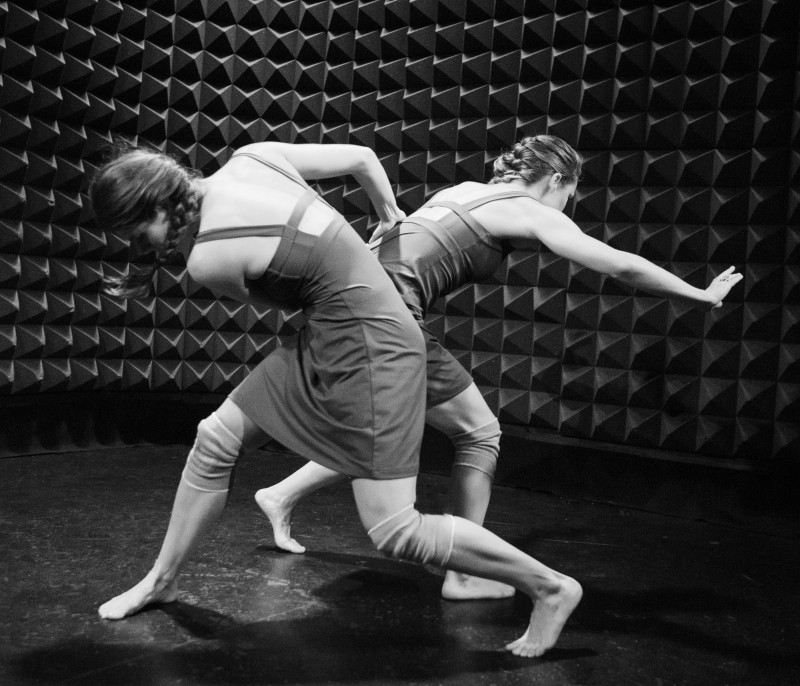 "Cadence" Photo by Yi-Chun Wu
Some advice to dancers on writing:
- Critique the field.
- Write as a translator, not an insider.
- Own your privilege – use it for good.
- Have non-dance-friends read your writing, edit accordingly.
What are the skills that a modern dancer needs in 2016?
– Grit
– A non-institutionalized understanding of "dance"
– Personal empowerment
– The ability to see a bigger picture and a broader world
– Truly understanding relevance. "Modern dance" was born of responsiveness to the world – it has become a static aesthetic notion – it has become the very thing it was developed to dismantle. Learn the history. Respond to your world – make modern dance.
Arts-related reading recommendations (books, websites, blogs, journals):
Last performance you experienced that really inspired you:
Disclaimer – very little dance-on-stage inspires me (period). So I have to have some connection to the work – unless it is truly incredible, relevant, effective and provocative. Choreographers, in this country, in my opinion, are not pushed to or rewarded for making relevant or provocative work.
Cedar Lake’s last performance (at BAM): because of the versatility of the dancers, the relevance of the choreography (sadly none of the choreographers were American) and the enthusiasm of the audience.
MAD BOOTS piece “Helpless People” set on Point Park students (I was the rehearsal director) – a truly challenging – to performers and audience – piece.
Che Malambo – Although there were many elements that were problematic in the work overall, I have not experienced that type of passion for dance, from performers, perhaps ever before in my life. It reminded me why I am so bound to this form.
Final thoughts: Hope/belief/love of the profession:
If we are looking to grow "audiences" for dance – and I hope we are – we need to make new works for these new audiences. And we need to be unafraid to enter a conversation with them (the audience) for the purpose of understanding what that looks like.
We also need to get comfortable with letting styles and forms morph into the next iteration of "modern dance." We will not lose anything if we intentionally incorporate what is into what will be.
——————-

 Life as a Modern Dancer
Leave a comment