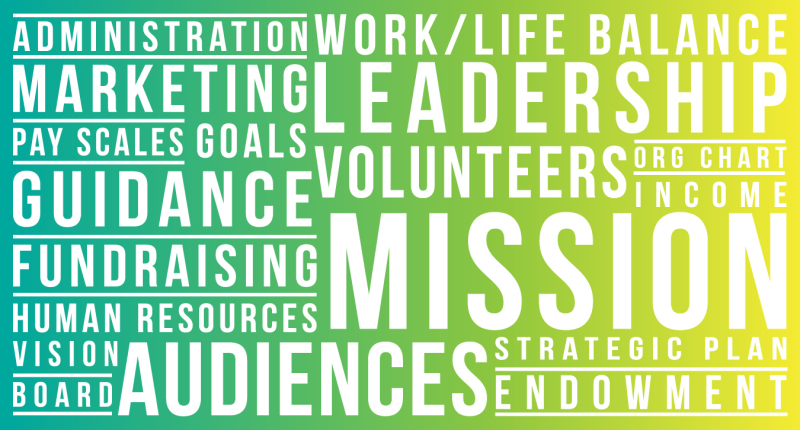
 Design: Jenny Lederer www.jennylederer.com
Throughout 2017, we will be using the alphabet as a novel way to unpack the many concepts of arts administration. Please join in. Thank you to the following arts administrators for adding ideas to the project:
- Ashley Thorndike-Youssef, Now Next Dance
- Fernando Maneca, BAX | Brooklyn Arts Exchange
- Hillary Kooistra, Abraham.In.Motion
- Kathryn Humphreys, Hubbard Street Chicago
- Katie Kruger, Shawl-Anderson Dance Center
- Liz Hitchcock Lisle, Shotgun Players
- Phyllis Haskell Tims, University of Utah (retired)
- Rebecca A. Ferrell, University of Illinois, Urbana-Champaign
- Sarah Crowell, Destiny Arts Center
- Tammy Cheney, Lines Ballet
Arts administration relates to work at dance centers, arts councils, arts education programs, companies, and college programs. Please read on to explore the many and varied topics within arts administration. While not every topic applies to every setting, we hope that you will still find one or two ideas in the post that are useful and applicable to your particular setting. Please feel free to add ideas and links in the comments section below.
This week, we will talk about the letter L:
- Living Transition Plan
- Leadership
- Long range plans
- Local funding options
- Liability
- Lifespan of an organization
—————
Let's unpack, consider, and reflect upon each one of these terms and phrases. Even before reading further, you might want to take the list of 6 ideas here and simply journal for your organization. What do these words mean to you at your organization?
L is for Living Transition Plan
In 2015, the Bay Area service organization Dancers' Group published a "living transition plan." This document is a gem – part personal reflection and part gift to the field in general. It is a valuable tool for your own organization to read and consider, even if leadership transitions feel a few years off.
L is for Leadership
In case you missed it, in 2016 the William and Flora Hewlett Foundation published the report called "Moving Arts Leadership Forward: A Changing Landscape." Hewlett Program Officer Emiko Ono is its author, and this 26-page report is another gem for the field (alongside the Living Transition Plan).
The report considers, questions, and unpacks arts leadership models from the past and what the field wants and needs in current times. As John McGuirk states in the Foreward:
Leadership that flows from the vision of a single individual has served the nonprofit arts sector well for a generation or more. But to be able to effectively respond to an increasingly demanding environment, organizations not only must adapt, they must be adaptive. Individuals with the responsibility, and the authority, to ensure that their organizations continue to thrive should invite their colleagues – people who care deeply about the mission of their organizations and understand their unique value to the communities they serve – to participate meaningfully in shaping the future of those organizations. In other words, they should invite them to share leadership.
Key terms from the report include:
- reimagining leadership
- early-career leaders
- mid-career leaders
- late-career leaders
- distributed leadership
- internally facing leadership
- externally facing leadership
The report concludes with a simple quiz to take to help nonprofits identify the leadership structure in their organization at the moment. Read more here:
L is for Long Range Plans
Long range planning is about your organization or school, and also your own career path. What are the ideas, dreams, and goals on the table for 5 years from now and 10 years from now? Long range plans might be about infrastructure growth, program growth, facility expansion, or an endowment. What is your impact? What is your legacy?
It can be ideal to reflect once a year about your own long range plans – both personally and professionally.
L is for Local Funding Options
Rebecca A. Ferrell (Assistant to the Head, and Director of Public Relations and Engagement, at the University of Illinois at Urbana-Champaign) recently shared a few thoughts on funding your program or project:
I always encourage my students to use resources closest to them first. Many people do not even realize how many amazing funding sources there are in their local communities. This was absolutely true of my dancers here at U of I. While our current BFA dance students at Dance at Illinois have the opportunity to apply for a number of scholarships for the development of creative work and physical practice opportunities through the Department of Dance, they also have access to multiple funding sources at a campus and/or university level. In the past 3 years we have had 10 BFA dance students receive funding from the Office of Undergraduate Research, the College of Fine and Applied Arts, and the James Scholar Program. This is a huge jump for previous dance recipients. Many times awardees of university research grants go to students in STEM majors because students studying the arts do not think their practice meets the eligibility requirements. But they absolutely do! It is incredible to see young dancers receiving research grants for their choreographic study alongside bioengineers, especially at an R1 institute.
Most local communities also have arts councils and organizations that fund projects directly involving their communities. This could range from space grants to full financial support for a new work. While bigger cities such as NYC and Chicago have many funding resources for their local artists, even smaller cities like Urbana, IL have an arts grants program.
Sixteen "city guides" have been published on Life as a Modern Dancer over the years, and many list local funding and arts council details. Find out more here about:
L is for Liability
In dance, we have to cover our bases to take care of our staff, students, and guests in our spaces. There are injuries and accidents. Consider both events onsite as well as field trips, carpools, site-specific choreography, outdoor events, and travel. What is your insurance? Do people sign a waiver? If artists rent your space for rehearsals, workshops, or performances – do you require proof of liability insurance? (FYI…the company K and K Insurance offers reasonable liability insurance for artists:
L is for "Lifespan of an Organization"
Lastly, DC-based arts administrator Ashley Thorndike-Youssef challenges us to consider some hard questions and realities:
Lifespan: Does your organization need to exist indefinitely? What are the markers of either success or un-sustainability? How will you transition your staff/intellectual property/board/financials? How can we re-conceptualize organizations with a sense of gestalt, rather than always fearing "founder's syndrome?"
———-

 Life as a Modern Dancer
Leave a comment