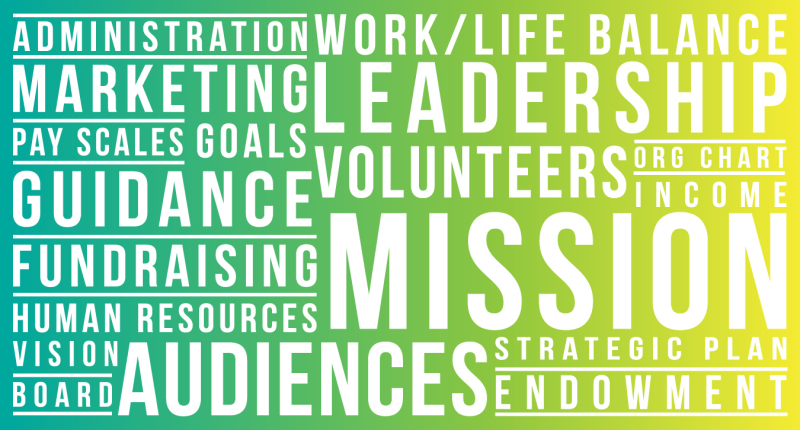
 Design: Jenny Lederer www.jennylederer.com
Throughout 2017, we will be using the alphabet as a novel way to unpack the many concepts of arts administration. Please join in. Thank you to the following arts administrators for adding ideas to the project:
- Ashley Thorndike-Youssef, Now Next Dance
- Fernando Maneca, BAX | Brooklyn Arts Exchange
- Hillary Kooistra, Abraham.In.Motion
- Kathryn Humphreys, Hubbard Street Chicago
- Katie Kruger, Shawl-Anderson Dance Center
- Liz Hitchcock Lisle, Shotgun Players
- Phyllis Haskell Tims, University of Utah (retired)
- Rebecca A. Ferrell, University of Illinois, Urbana-Champaign
- Sarah Crowell, Destiny Arts Center
- Tammy Cheney, Lines Ballet
Arts administration relates to work at dance centers, arts councils, arts education programs, companies, and college programs. Please read on to explore the many and varied topics within arts administration. While not every topic applies to every setting, we hope that you will still find one or two ideas in the post that are useful and applicable to your particular setting. Please feel free to add ideas and links in the comments section below.
This week, we will talk about the letter M:
- Marketing
- Mission statements
- Mentoring
- Managing staff
- Manager/Managing Director/Business Manager
- Micro/macro topics and tasks
- Movement and meditation in meetings
———-
Let's unpack, consider, and reflect upon each one of these terms and phrases. Even before reading further, you might want to take the list of 7 ideas here and simply journal for your organization. What do these words mean to you at your organization?
M is for Marketing
Fernando Maneca, Communications and Marketing Director at the Brooklyn Arts Exchange, recently shared a key concept:
Know the difference between selling the organizational brand and selling specific products (classes, programs, services, event tickets, swag, etc). We tend to be really good at the later and often forget the former.
Take some time to look at your logo, website, print materials, and ads. Also, what about t-shirts, stickers, and bags? What purpose does marketing serve in 2017 for you?
Do a visual survey of all of these items – what words come to mind to describe the organization and its offerings? Try to list out 10 descriptors. You could do this as an activity in a staff meeting.
Beyond items….there is content and the writing which describes it. Press releases and calendar listings are key documents to create, post on your website, and share in the community with publications and dance writers. Press releases and calendar listings provide information about upcoming performances, festivals, workshops, and more.
Taking a course or workshop in your community can be very helpful. If that is not an option in the near future, there is also a resource out there to lead you through the process. It is money well spent.
Dancers' Group is the service organization for the Bay Area dance community. They created Public Relations & Marketing: A Do-It-Yourself Guide. This information is accessible and useful throughout the United States. This easy to read and apply document is 30 pages – explaining marketing, public relations, components of a press release, writing tips, and more.
The booklet costs $15 for Dancers' Group members and $30 for non-members. Considering how few places you can learn this information – which you can use for years and years to come – spend the money for the guide.
Click here to read more and to purchase the guide.
Second, consider getting Michael M. Kaiser's book The Cycle: A Practical Approach to Managing Arts Organizations. There are so few books explaining and exploring arts administration; this one contains valuable marketing ideas.
In terms of marketing efforts and tasks, is this work spread out through the organization? Or is there a Marketing Coordinator or Marketing Director? For smaller arts organizations, is it a group effort? Has that been explicitly stated lately?
M is for Mission Statements
These opportunities are possible because of the serious movers and incredible performers in the company who are able to act and dance, step into the world of history, and come soaring into the present.
From Triskelion Arts:
Triskelion Arts has a two-fold mission as a 501(c)3, non-profit organization: To foster the development and presentation of the performing arts by providing quality, affordable, accessible rehearsal, class, and performance space to the general public and to provide opportunities to the arts community, especially choreographers, for the creation and presentation of new work.
From the Dance Department at the University of Illinois at Urbana-Champaign:
The mission of Dance at Illinois is to promote and expand the role of dance in contemporary culture. Utilizing a range of experimental and canonic approaches, we generate choreographic, pedagogical, performative, and scholarly research that shapes educational and public programming. We explore the dynamic intersections between research and teaching in academic, professional, and community settings. We forge imaginative, innovative, and sustainable lives as artists and educators through the transformational processes of dance.
Check out 11 more examples here.
M is for Mentor/Mentoring
In your role and at this moment in time, are you serving as a mentor or seeking mentorship? Especially invaluable in the field of arts administration – which has so few formal training programs and publications – mentors offer support, dialogue, guidance, examples, and resources.
M is for Managing Staff
Like managing a cast for a project and shaping your work of art, managing staff requires time, care, and a lot of trial and error.
Take 10 minutes to reflect on prior work experiences in your own life. Who were your managers? What were their strengths and weaknesses? What has left a lasting impression on you?
Words synonymous with managing include: supervising, overseeing, evaluating, leading, and coordinating. Related to the last topic….where does mentoring fit in here too?
Managing staff relates to task delegation, creating work schedules, evaluation of projects and employee performance, leading meetings, making informal and formal observations, and offering feedback.
M is for Manager/Managing Director/Business Manager
Many job titles actually relate to management. Here are some ideas and examples from a variety of arts organizations for the sake of comparison.
From Abraham.In.Motion:
Company Manager: Hillary Kooistra
Production Manager: Dan Stearns
Finance Manager: Lucy Mallett
From Destiny Arts Center (Oakland, CA):
Grants Manager, Senior Programs Manager, Onsite Programs Manager, Business & Operations Manager, Communications and Programs Manager.
I also encourage you to take a few moments to look at the staff page for Gibney Dance in NYC. This includes people working for the school and for the company. Managers, directors, assistants, and interns:
https://gibneydance.org/about/people/
Susan Medak, the Managing Director of Berkeley Rep (theater), recently wrote this related article for American Theatre. It is entitled, "Administrators Can Be Visionaries Too." Read it here.
M is for Micro/Macro Topics and Tasks
As a leader for an arts organization, this might be one of the biggest and most continuous challenges in your role. How do you balance being "all in" and "all hands on deck" with events and projects, yet still keep a keen eye on the mission and vision of the organization (as well as goals, strategic plan, and local and national issues of relevance).
It might mean literally putting into your planner once a week for an hour of deep thinking and reflecting – through journaling, taking a walk, reading a relevant book, or talking with a mentor. We must hold onto this concept – as weeks and months simply slip by ticking off items from the "to do" list.
Related….where is your organization at? Let's take a pulse here. What "mode" or "state" are you in? Which word describes your organization?
- Building
- Developing
- Growing
- Maintaining
- Managing
- Streamlining
- Pruning
- Surviving
- Diminishing
- Repairing
- Rebuilding
- Re-envisioning
- Thriving
M is for Movement and Meditation
Sarah Crowell, Artistic Director of the Destiny Arts Center, reminds us to consider incorporating movement and meditation into meetings of all kinds. This simple and essential idea will keep us grounded in the essence of our work – embodiment and intention.

 Life as a Modern Dancer
Leave a comment