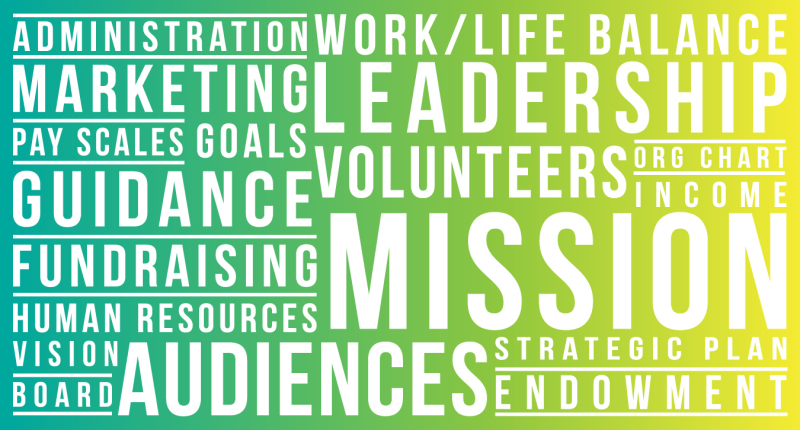
 Design: Jenny Lederer www.jennylederer.com
Throughout 2017, we will be using the alphabet as a novel way to unpack the many concepts of arts administration. Please join in. Thank you to the following arts administrators for adding ideas to the project:
- Ashley Thorndike-Youssef, Now Next Dance
- Fernando Maneca, BAX | Brooklyn Arts Exchange
- Hillary Kooistra, Abraham.In.Motion
- Kathryn Humphreys, Hubbard Street Chicago
- Katie Kruger, Shawl-Anderson Dance Center
- Liz Hitchcock Lisle, Shotgun Players
- Phyllis Haskell Tims, University of Utah (retired)
- Rebecca A. Ferrell, University of Illinois, Urbana-Champaign
- Sarah Crowell, Destiny Arts Center
- Tammy Cheney, Lines Ballet
Arts administration relates to work at dance centers, arts councils, arts education programs, companies, and college programs. Please read on to explore the many and varied topics within arts administration. While not every topic applies to every setting, we hope that you will still find one or two ideas in the post that are useful and applicable to your particular setting. Please feel free to add ideas and links in the comments section below.
This week, we will talk about the letter P. There are many ideas, words, and concepts:
-
Physically integrated dance
-
Pay scales
-
Pay raises
-
Policies
-
PR
-
Participation
-
Prioritizing
-
Partnerships
-
Post-performance and post-project meetings
-
Professional development and professional learning communities
-
Programming
-
Projects and programs
-
Plateau
-
Positives, potential, and personal/professional goals
———-
Let's unpack, consider, and reflect upon each one of these terms and phrases. Even before reading further, you might want to take the list of ideas here and simply journal for your organization. What do these words mean to you at your organization?
P is for Physically Integrated Dance
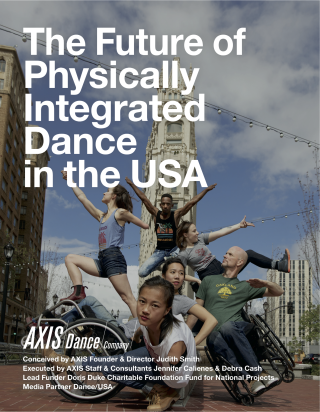
In 2017 The Future of Physically Integrated Dance in the USA was published through AXIS Dance Company and Dance/USA. Following artist Judy Smith's vision, this document brings together conversations, convenings, and research throughout the past few years. This comprehensive document considers training for both performers and choreographers as well as articulating the priorities within physically integrated dance. The Future of Physically Integrated Dance in the USA celebrates the work of the past decade but quickly challenges us to face the list of priorities and needs, as well as an inclusive vision for dance making, performance, and training in the United States.
Find the 48-page PDF document here.
P is for Pay Scales
Once a year, or every few years, are you able to assess the pay scales for all arts administrators, teachers, technicians, and accompanists on staff? How do you stay competitive? Who can you turn to locally and nationally for confidential conversations about pay scales for various job positions?
P is for Pay Raises
Linked closely with the concept of "pay scales," pay raises are important to assess and articulate each year. It is important to set up that there might not be a pay increase every year. If you have done your research on pay scales, sometimes people might be at the top of their pay scale range for their job.
Please also carefully consider cost of living increases of 2-5% per year.
To read more about pay raises for teachers, check out this August 2016 article in Dance Studio Life Magazine:
Tell It Like It Is: A System Of Teacher Evaluations And Pay Increases Promotes Communication And Job Satisfaction – By Jill Randall
P is for Policies
Policies create clarity, professionalism, and parity. Consider the following for your administrative staff and teaching staff, as well as board-related policies:
For staff:
- Sick time/sick pay
- Vacation requests
- Time off to perform or show work
- Purchases/reimbursements
- Number of subs you can have each semester/# of missed classes
- Staff benefits: use of space, free or discounted classes, perks for your family members
For the board:
- Investment policy
- Reserve/rainy day policy
- Spending limit for staff, before needing to get board approval
For students:
- Refund/credit policy for classes and workshops
- Injury policy
- Absences, and how this relates to upcoming performances and roles students have in productions
P is for PR
"PR" is different than marketing. Public relations can contain "feel good stories" and human interest articles. The idea is to share, connect, and widen the circle of dancers and dance enthusiasts alike.
As shared on the blog in January 2015, here are some ideas about PR (and marketing) for dance companies:
"Marketing" and "public relations" (PR) are interrelated terms. But, what do they mean for a dance company? And ultimately, what are you doing – PR and marketing wise – for your upcoming show? Once the wheels are in motion for the next project, a choreographer must develop her artwork as well as marketing and PR plans months in advance of the performance dates.
MARKETING
Marketing is building awareness that an event exists and building connections with the potential audience. Very concretely, you have to have your show dates, times, space, and ticket prices in order. One component is selling, and in our dance world this mainly means ticket sales.
"Marketing materials" provide all of the basic information about the show – plus hopefully a compelling title and photo or two. This usually includes a:
- Postcard
- Poster
- Website
- Facebook Event Page
The marketing material provides the who, what, where, and when.
How can people purchase tickets – online, in person, or just at the door? As soon as you have your dates, I suggest lining up how people can purchase tickets. Brown Paper Tickets is used by many modern dance companies for online ticket sales.
Is there a group rate for the event, so that college classes and high school groups can reserve a block of tickets? Do they contact you directly?
As for photos, whether a friend snaps some images or you spend a few hundred on a photo shoot, these images will be used on the postcard, web, and any press you receive. How can they be eye catching and unique? When someone picks up your postcard, what 3 words might she use to describe your upcoming event? How do these selected images convey the look, feel, and theme of your show?
As Michael M. Kaiser wrote in his book, The Cycle: A Practical Approach to Managing Arts Organizations,
Design is a crucial element of the marketing effort as well. As arts organizations, our marketing materials should be beautiful and creative and well designed. They also need to be readable – especially by our target audiences – and convey a spirit of excitement and artistic accomplishment. I have often complained about the proposed design of marketing materials when the pages are too full of too-small type. It is difficult for many in our audience to decipher the information contained in these advertisements and brochures, and many simply stop trying (43).
PUBLIC RELATIONS/PR
Public relations uses the marketing materials – plus more materials – to get the word out about your show, your art, and what you are exploring. These might be stories about the choreographer, the company, or some other component of the project that catches a writers' attention.
PR relates to newspapers, websites, calendar listings, social media, and dance writers and dance critics in general. You are connecting with the community in the weeks leading up to your show.
Public relations work involves conversations, emails, interviews, and writing of articles and show previews. Ideally, we want people finding out about our work, getting curious, and ultimately attending our shows.
Whenever possible, getting a commitment from a local dance writer to attend your performance is ideal.
PR work includes:
- Writing a press release, plus uploading it to your website and getting copies to local dance critics (here are examples on the Joe Goode Performance Group website)
- Submitting the basic show information for calendar listings to local newspapers and websites (usually a few months prior to the performances)
- Using social media (Facebook, Twitter, and Instagram) to promote your work
- Crafting emails and email newsletters to your email list, friends, family, and colleagues
- Developing a press section on your website (here are examples from AXIS Dance Company and Hope Mohr Dance); the media kit provides bios, articles, pictures, and more about the company
- Creating a few hard copy "press kits" to have on hand to provide to dance writers at the performances
Your local dance service organization (like Dancers' Group in the San Francisco Bay Area) might already have a local guide for choreographers related to marketing, public relations, key contacts, and key deadlines. This will streamline the work for you!
Ultimately, your marketing and PR work is about audience development and community engagement. This is an ongoing process. Be patient with yourself as you learn the basics: key contacts, timelines, and how to write a press release. Your initial research and work will become valuable information you will use again and again in years to come.
P is for Participation
This is beautifully related to PR….who "participates" at your site? What does participation/engagement look like? Are these temporary or one-time things, or long-term participation over the course of the year or a few years?
And more broadly speaking….Who gets to participate in dance? How, when, where, and why?
P is for Prioritizing
Ah, prioritizing. Eyes on the prize, goal, or dream. The ties back to the mission.
How do you and your employees set priorities each week or month? Is this articulated in meetings? Can priorities be written out at the top of meeting agendas, or posted on the wall?
Fifty things can easily distract us each and every week. Working together to articulate and accomplish priorities is a team effort.
P is for Partnerships
There are a few related words that get easily tossed around these days: collaboration, collaborations, team, community partners, and partnerships.
A "partnership" implies an intentional, mutual relationship bringing together two or more organizations and schools. There is a benefit to both, and a belief that working together strengthens the work and widens the circle.
Who are your community partners? How long have these relationships existed?
If you could build one or two more partnerships over the next year, who would it be with?
P is for Post-Performance and Post-Project Meetings
We all are working at such a fast pace; are you able to build in time after each big project, event, or performance to debrief, reflect, and celebrate? The protocols within the Critical Friends Group work are ideal for these conversations (to facilitate structured and supportive meetings). Here is one that you can try out (on pages 4 and 5):
http://www.nsrfharmony.org/sites/default/files/2014.January.Connections.pdf
P is for Professional Development and Professional Learning Communities (PLCs)
Professional development – and collegiality and inspiration – needs to remain top priority within your department or organization. And, there are many creative ways to gain professional development, from large conferences to site visits and informational interviews. Ideas include:
- Conferences through Dance/USA, NDEO, and Americans for the Arts
- Online courses
- Low-residency MFA and MA options (like Goucher's MA in Arts Administration)
- Observing classes and other teachers
- Site visits to other campuses and arts organizations
- Informational interviews with colleagues in the field
Taking a cue from the K-12 educational realm, professional learning communities (PLCs) are a transferrable concept to use within the arts as well. Essentially, a group of people decide on a few topics of interest/curiosity/growth. People select one group to be a part of, and leadership is built within the groups (not just the heads of organizations or departments leading all of the meetings). For example, at a dance center you might have a few PLCs that are exploring: levels, interns/internships, assessment of programs, and building a peer mentoring program. PLCs might meet once a month for 4-12 months.
Read more about PLCs on edutopia.org:
Collaboration Is at the Heart of PLCs
How to Create a Professional Learning Community
Give Your Teacher Team a Boost
P is for Programming
Classes, master classes, workshops, performances, symposiums, panels…
Describe the quantity: sparse, full, over full, balanced
Describe the content: new, controversial, risky, typical, common, repeat, expected, unexpected
Describe the participants: regular community, new participants, the age of the group, the age range
Michael M. Kaiser's book The Cycle: A Practical Approach to Managing Arts Organizations unpacks programming choices, highlighting the risks and opportunities. Find the book here.
P is for Projects and Programs
It is also valuable to take a few minutes and jot down all of the projects and programs you have going on right now. What is temporary? What is long-term? What is the value of both? Which are public?
P is for Plateau
In general, we exist under the assumption of more — more funding, more donations, more performances, more students. But, realistically, at a certain point your organization or school might plateau. You might reach the limit that the market can bear, or how many people your studio or theater can literally fit in the space.
Have you and your employees talked openly about the idea of plateauing?
P is for Positives, Potential, and Personal/Professional Goals
Three fruitful reflection questions can be for yourself, or for a future staff meeting….
Positives. List out some "positives" of your staffing structure right now. List out some "positives" of your programming….
Potential for…. This can be a useful journaling activity, or start of a staff meeting. Brainstorm for a few minutes and begin each sentence with "potential for…". What might happen at your organization? These could be positive or negative actions, opportunities, or outcomes. Can you generate 10 ideas?
Personal and professional goals. Last, consider journaling for 15 minutes about your personal and professional goals for the next 5 years. Plus, do you have the opportunity to discuss this with your mentor, close friend, or significant other? What are your goals in terms of job title, responsibilities, income level, and job site?
And a few other "P words" to consider….
- Process vs. product; process vs. performance
- Pride. What are sources of pride for your organization or school?
- Productivity. What does it mean to have a productive week? A productive year?
- Words for organizations and administrators: productive, persistent; perseverance, patience, pitfalls, pace, profitability
- P verbs: produce, perform, promote, professionalize, participate, present
- P job titles*: Production Manager, Publicist, PR Coordinator, Program Director, Producer, Performer, Panelist, Professor, Presenter
- "P items" on your website: photos, photo gallery, press, press kits, press releases, performance calendar
—
*Check out this self-assessment/job survey here.
———————

 Life as a Modern Dancer
Leave a comment