A recent conversation with a theater colleague inspired this series of questions and posts. Please join us!
Questions and wonderings include:
- What is your studio practice?
- Is your studio practice tied up/intertwined with an actual production on the books?
- When do you have time for noodling around, improvising, and playing without product? Is this with other dancers, or mainly yourself?
- The fine line – and intersections – between self-care and creative work, exertion and recuperation, training and art making
- Do you consider being in class part of your practice? Teaching as part of your practice? Basically….what falls under the category of “studio practice?”
- If your answer is NO at the moment to a studio practice, what do you aspire to create or make happen in your artistic life in the near future?
- And, does the topic of studio space play into this? Do you have regular access to a space (free or for a fee)?
Plus,
- What does my body need today?
- Where does my creative spirit + curiosity take me today?
Today we hear from artists Wendy Jones (San Francisco) and Pamela Wong-Shoebottom (Toronto).
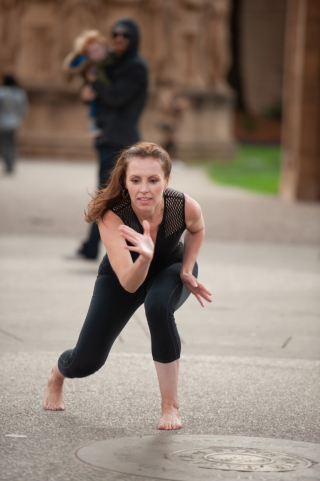
From Wendy Jones (San Francisco):
Working in an empty studio is very special. I love stepping into a quiet space, a clean slate to play, practice, and investigate my work and its potentials.
As a dance educator on sabbatical, I am reflecting back on my studio practice during the academic year. I wouldn’t define it as a practice. My “practice” as an educator is getting work done, creating technical combinations and choreography for the five classes and company repertory I teach. Although I keep up with the rigorous schedule, I feel that my movement choices are not as investigated as they could be. Hence the sabbatical.
This year I have tried to rent space and take the time to live in my body. I find that I need at least an hour and a half to “get to the meat” of the material. I am learning that the short sessions at Lowell High School are fine for “getting things done” but not valuable for the development of my work.
In this exciting time in my dance practice and artmaking, I’ve learned that my studio practice is fueled by a production or clear project. When on a deadline I crave as much studio practice time as I can get. However, I am trying to make short goals to keep me practicing even when there isn’t a deadline.
When I transition back into the academic schedule, I aspire to find more time for solo practice. Although my choreography is usually grounded in dynamic group work, I understand the importance of practicing for myself. I’ve learned that my body needs to be fully connected to the work I present to my dancers. Time spent in dance classes and workshops is also very important for my own training as well as inspiration.
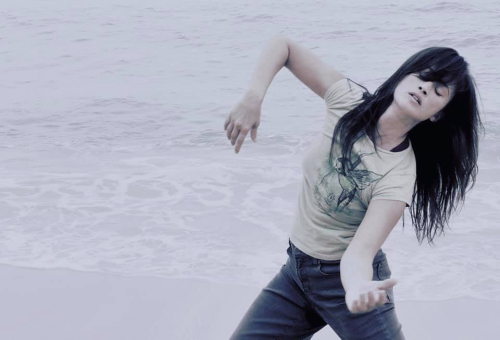
From Pamela Wong-Shoebottom (Toronto):
Studio time to practice teaching, performance or choreographic material is time I try to be as efficient as possible. I do not noodle freely in that time, in an effort to be cost effective. Though, there are times when I hit a creation-block and I do enjoy improvising for the remainder of the booked time in the studio. I consider a large part of my studio practice to happen in my home, as I often move furniture to improvise, create teaching material and do conditioning work.
With Director Kenny Pearl, I help run Great Moving Dancers in Toronto. This subsidized open contemporary technique class is available to professional independent dance artists and is taught by a rotation of established local choreographers, performers and teachers. This has been what has made it possible for me to keep an affordable and committed studio practice for nearly a decade. In Toronto there is ample access to affordable studio space, but it is still a challenge for local artists, myself included, to fund this over a length of time, without grants and awards to do so. I aspire to spend more time bodystorming in the studio to independently explore and clarify my movement vocabulary. I believe this type of practice would also fuel creative release and my love for dance.
——–
Related posts:
Blog Series: Studio Practice/Studio Time (Rebecca Stenn)
Inspiration: One dance word a day with the 365 Dance project
———————–

 Life as a Modern Dancer
Leave a comment