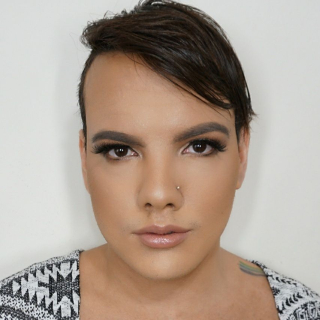
Hometown: Paterson, New Jersey
Current city: Oakland, California
Age: 29
College and degree: William Paterson University of New Jersey; B.A in Women’s and Gender Studies with a minor in Public Relations
How you pay the bills: Arts administrator by day, writer and choreographer by night
All of the dance hats you wear: Community Engagement Manager for AXIS Dance Company, founder of marked dance project, and choreographer
Non-dance work you do or have done in the past: Marketing for higher education, author of Drafts: An Imperfect Collection of Writing
———–
Describe your dance life…
High school: As a disabled person, I was not introduced to dance early in life. It wasn’t until high school that I met my first dance teacher, Erin Pride, at Rosa L. Parks School of Fine and Performing Arts in Paterson, New Jersey. Born prematurely, I developed Cerebral Palsy at birth, and it impacted my mobility from a young age. During my freshman year at Rosa Parks, I sat in the back of the theater watching the dance majors rehearse. I remember being in awe of them. Around that time, I was grieving the loss of my brother who had been murdered in upstate New York. His death pushed me to live life authentically. Because of his passing, I came out of the closet as gay and later gender nonconforming, and pursued my interest in dance.
I remember approaching Erin as an awkward teenager, asking her if I could take class. I would skip gym class to dance. At the age of 17 and after a couple of years of training under Erin Pride, I founded marked dance project, a contemporary dance company for disabled and non-disabled dancers. I became the youngest person in the United States to ever found and artistically direct a physically integrated dance company. Having done a Google search, I discovered Judy Smith and her work with AXIS Dance Company and Mary Verdi-Fletcher of Dancing Wheels. With the help of Erin, MDP would go on to commission about six choreographers for our first season before I discovered my own love of choreography.
College: As a first generation college student, I didn’t have any examples of what it meant to go to college in my immediate family. There was no blueprint for me, and I would have to navigate a lot of it on my own. I was a creative thinker who struggled throughout high school academically but managed to score pretty well on the SATs. My strong SATs got me into a college program called Educational Opportunity Fund (EOF) at William Paterson University of New Jersey which is a program for low socio-economic students, many who are first in their families to go to college. Having barely made it into the program, I made a promise to Carmen Ortiz, the program’s director, that I would be a great college student.
During my freshman year, marked dance project became a company-in-residency at William Paterson, and that’s when we really blossomed as a company with support and resources from the Student Government Association. Our education programming, The Movement Series, offered students and the general public free master classes with a variety of choreographers and dance educators such as Marinda Davis, Stacey Tookey, Tyce Diorio, Todrick Hall and many more. We would also go on to produce shows at William Paterson that would bring concert dance to the community since WP doesn’t have a dance program.
The first 2 years after college: Like many first generation students, I wasn’t sure what my life would look like after college. I became a staff person at William Paterson, overseeing communication and marketing for a new office that had been developed. This prepared me for a full-time social media marketing position at John Jay College of Criminal Justice, where I worked for nearly four years. During this time, I was able to bring marked dance project to campus with a production and various programming, integrating my day job with my passion for dance. Although I loved working with students, I realized that my passion wasn’t in marketing, and that led me to dare greatly and jump ship and move across the country to California.
Now: While I never imagined that I would be doing dance work full-time, I knew that I had an opportunity of a lifetime to join AXIS Dance Company as their next Community Engagement Manager, and I was so excited to return to the Bay Area. Back in 2013, Judy gave me the opportunity to serve as an AXIS Apprentice, which introduced me to the world of AXIS. I was blown away by my experience, and I knew it would be the right next step for me in my career. Now in the position for over a year, I’ve learned so much about arts administration and what it takes to keep a company like AXIS running. In addition to my work at AXIS, I have been commissioned by Shawl-Anderson Dance Center for its inaugural Queering Dance Festival and by Fresh Meat Production’s FRESH WORKS grant program. I am also focusing on writing a new collection of poetry and essays.
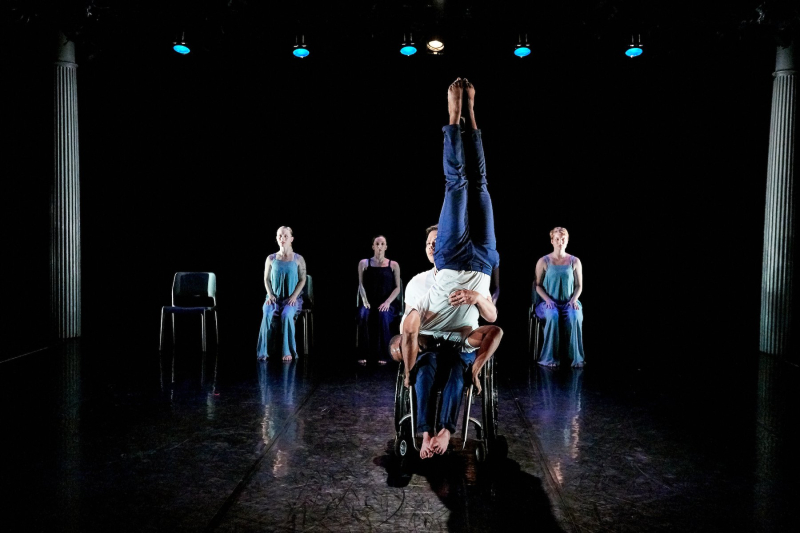
"The Wait" choreographed by Mark Travis Rivera. Photo by Andrew Fassbende.
Major influences:
Although I never got to meet them, I am deeply influenced by the work of Alvin Ailey and Martha Graham. As a disabled choreographer, I am deeply moved by Graham’s quote, “Great dancers are not great because of their technique, they are great because of their passion.” I remind myself every time I am working on a new project that my passion for dance is what will be felt and remembered by those who view my work. I am also influenced by the research and work of Dr. Brené Brown, who studies shame, vulnerability, and courage. I first discovered her work while I was living in the Bay Area in 2013, and it fundamentally changed my life.
What are you exploring and focusing on as a choreographer right now?
For a while I was focusing on a new duet inspired by my relationship with my mother, for the Fresh Meat Festival, but that’s been postponed due to COVID-19. So I will keep that in my back pocket for a later opportunity. I also began doing research for what I hope will be my next group piece, focusing on support groups and mental health in the queer community. My work always tell a story– whether that story is inspired by my own life or the lives of those I care about. I hope that once we find our new normal, post COVID-19, that I will have more opportunities to create work in the Bay Area.
What do you love about arts administration? How do you bring your choreographic mindset into the work at AXIS?
What I love about arts administration is that it allows me to do work that is more closely aligned with my passion: dance. I get to support artists and work on programs that directly impact disabled and non-disabled people.
Current training practices and care of the body:
I speak openly about my mental health journey and the role that therapy has played in my life for the last ten years. So a big way that I take care of myself is by going to therapy regularly and even support groups for those who have depression and/or bipolar disorder. To care for my body, before COVID-19, I would take yoga class once a week and the occasional dance class.
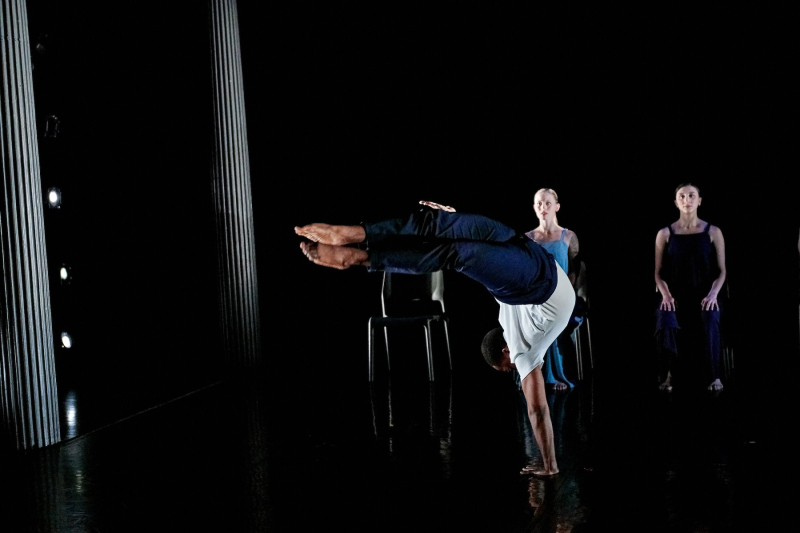
"The Wait" choreographed by Mark Travis Rivera. Photo by Andrew Fassbende.
Last show you saw that inspired you:
I had a chance to watch my colleague and friend Sonsherée Giles perform in a show with choreographer Nancy Karp right before shelter-in-place went into effect, and I was deeply moved by the work. It reminded me of my modern dance roots, and it was simple yet beautiful to watch. As a choreographer, I tend to always want a story in my work and rarely ever do abstract work, but Karp’s choreography reminded me of my roots in modern dance and it was refreshing to experience movement for movement's sake.
Non-dance activities, hobbies, and service work important to you:
Before I became a dancer and choreographer, I was a writer, so writing continues to play an important part of my life. My first collection, Drafts: An Imperfect Collection of Writing, is available for purchase exclusively on Amazon. I also really enjoy reading books, and I am getting back into a practice of reading more regularly. As a queer person, LGBTQ+ advocacy is important to me so I devote time to community building, public speaking, and presenting about the issues that impact LGBTQ+ people.
Advice to dancers interested in getting into arts administration:
My biggest advice to dancers who are interested in getting into art administration is that it will require you to use a different part of your brain, and while the work is creative, it is different. I find it fulfilling to have a “day job” that is within the field I am most passionate about and find the work fulfilling but it is still work– some days will be harder than others.
Final thoughts: Hope/belief/love of the profession:
My life could have taken a different direction had I not discovered dance. I am thankful for the opportunities I have been given and love being a choreographer. My hope is that other disabled children get to see themselves reflected in the work that AXIS, Dancing Wheels, Full Radius, Heidi Latsky Dance, and others so that we raise a generation of dancers that defy expectations. My belief is that everyone should have the opportunity to move their body, to profess their love for storytelling through movement. I love being a disabled choreographer, and I can’t wait to see how we find our way back to each other after COVID-19.
———–

 Life as a Modern Dancer
Leave a comment