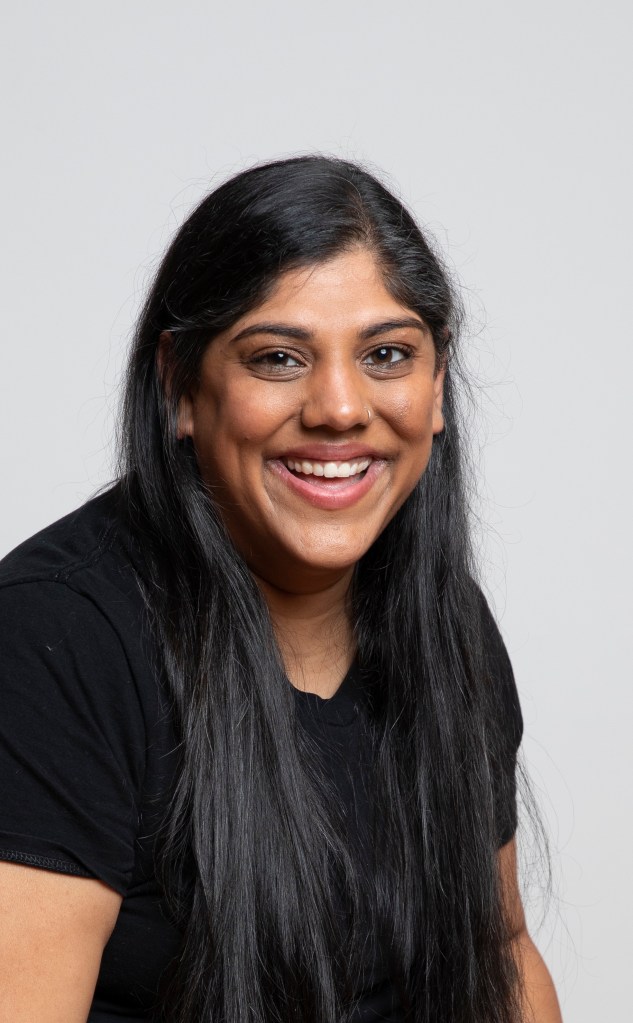
From Blog Director Jill Randall:
After several years away from the Artist Profile series, I am thrilled to re-launch it in Fall 2025, and excited to have contributing writer Bhumi B Patel sharing her career path on Life as a Modern Dancer. The Artist Profiles are a wonderful way to hear first-person reveals and shares about what we do, why we do it, the challenges and heartbreaks, and the hope for the field and for ourselves.
——
Hometown: Orlando, Florida
Current city: Oakland, California
Age: 35
College and degree: Agnes Scott College, BA in Dance and Creative Writing
Graduate schools and degrees:
Florida State University, MA in American Dance Studies
Mills College, MFA in Dance
The Ohio State University, PhD in Dance Studies
Website: https://www.pateldanceworks.org/
How you pay the bills: Mostly through freelancing! It’s a combination of teaching, writing, and administrative work!
All of the dance hats you wear: These days the two primary hats I’m wearing are research/scholarship and artistic.
Non-dance work you do: Nothing right now!
————-
Describe your dance life…
20s: When I was in my 20s, I finished my BA at Agnes Scott College in Dance and Creative Writing, after which I immediately began working on an MA at Florida State University in American Dance Studies. My undergraduate advisor, Bridget Roosa, had created a dance curriculum that focused on laying a foundation of understanding and appreciation of the importance of dance in the social and political history of the US. This foundation really cemented my interest in dance scholarship and history, so I went for an MA! During that time I wrote my thesis project that I titled “Anna Sokolow’s Rooms: A Case Study of Dystopic Americana Synthesizing Historical Research, Movement Analysis, and Restaging from Labanotation Score.” During that project, in addition to the written scholarship, I was able to restage a portion of Rooms which taught me so much about embodied research and how to contextualize historical dance for the present.
While completing my MA, I got injured (I broke both my femurs) and wasn’t able to dance for about a year which really forced me to change how I was approaching my dance “career” and what I wanted to do and what I was going to be able to do. During that time, I moved to New York to participate in a program called FSU in NYC (now called Arts in NYC), and I worked as an arts administrator for Doug Varone and Dancers. After quite a bit of recovery from injury and a harrowing New York winter, I decided to go back to school for my MFA and commit deeply to my creative practice alongside my scholarly practice. I got into the MFA program at Mills College, which is what brought me to California.
While at Mills, I was relearning what kind of dancer I was in the wake of injury, and so I wanted to understand the relationship between dance practice and grief, and what it means to process grief through physical practice. At a friend’s recommendation, I had been taking Gaga classes as an entry point back into dancing, and it served a purpose because I could adjust volume and movement to meet my recovery where I was. For my MFA, I ended up creating a group performance work called “somewhere better than here/nowhere better than here,” a solo piece called “remaining tender,” and I restaged a work by Anna Sokolow called “Kaddish,” which gave me insight into another choreographer’s vantage point for expressing grief and loss in a performance work. I wrote a thesis titled: “When the Whole World is Empty: Gaga as a Modality for Kinesthetic Grief Processing.” This was an opportunity to really start to understand the way embodied knowledge can work to process emotional and physical pain. I write below about my complicated feelings about Gaga.
Once I graduated with my MFA, I started pateldanceworks, and took a variety of different jobs in dance as an administrator, dance teacher, and writer to stay deeply connected to dance.
Early 30s: As I entered my thirties, we also entered a global pandemic, which was another moment in my life that I had to reassess and figure out how to pivot and keep going. pateldanceworks continued making some online and outdoor programming, but that seed of being a researcher was still growing in me and so I applied to get a PhD in Dance Studies, and began that work. The PhD process really revealed to me how much scholarship and embodied practice are interwoven for me, and while working on my dissertation project, I began a new project that was my biggest one yet. In 2023, I premiered a work called “fault lines” that was a multidisciplinary collaboration with queer and Asian performance artists, experimental composers, and a visual and textile artist. I took this work to New York, Manoa (Hawaii), and Columbus (Ohio), which I absolutely loved getting to do. I’m hungry to travel with performance works! I finished my doctorate in May 2025 with my dissertation project “The Spectre of Liberation: Queer of Color Improvisations and the Decolonial Dream.”
What am I doing now? I have leveraged my love of writing and my desire to create equity in the field by writing about dance and launching a mentorship program called imprint that supports queer of color emerging writers in the Bay Area. I have been a curator and guest editor for InDance, and have been publishing writing in a variety of publications including Contact Quarterly, Refractions Journal, Performance Research Journal, and Life as a Modern Dancer.
I’m also adjunct teaching right now and hoping to land in a full time position soon!
My artistic self is focused on wild light right now, but I’m looking forward to the next project I have planned to premiere in 2027, which hopefully you all will hear about in the not-too-far future!
Current movement practices and care of the body:
I think my movement practices have evolved quite a lot over the years. In the last two years, I’ve been doing a lot more non-dance movement practice through running and swimming, but I always return to improvisational practice as a way to return to the body.
I am grateful to see the word “somatics” being used more widely and expansively. What does the word mean to you? Do you have a somatic practice or bring in somatic concepts into your teaching or rehearsal practice?
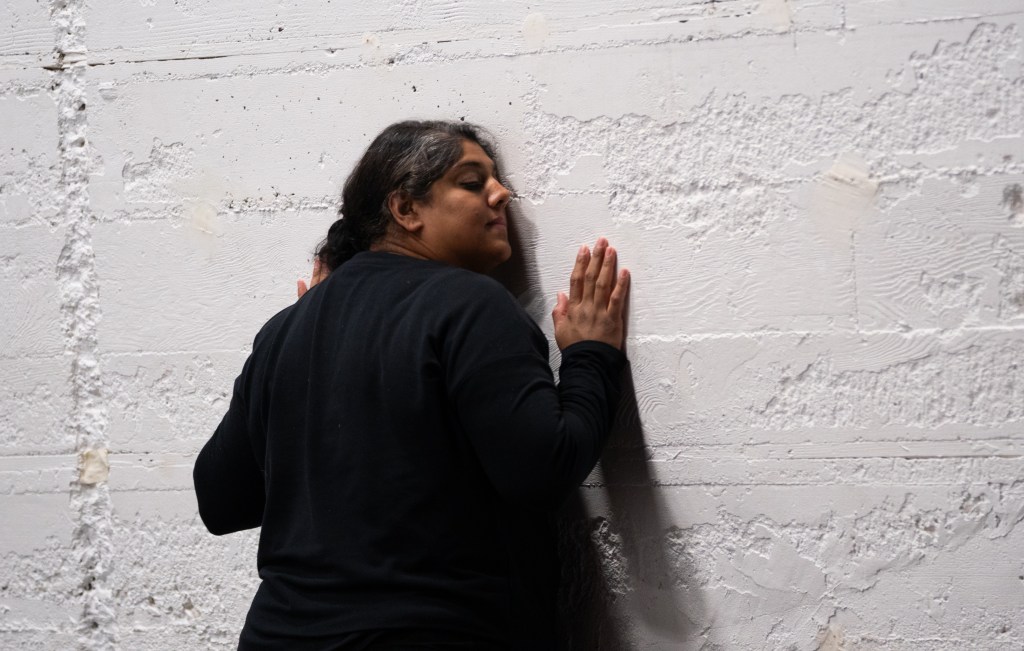
I’m also thrilled that somatics is being used more widely and expansively. I really think we need somatic practices at a time when a lot of our lives are kind of happening online or mitigated through screens. To me, somatic practice is utilizing movement to remind and remember and draw attention to physical sensation in the body. I do bring in somatic practice into my teaching and rehearsal practice, often through improvisation that is guided by sensation, imagery, and feeling.
I wrote in a Life as a Modern Dancer piece in 2022: “To improvise is to center the mover (me) as an expert on my own experiences and to embody the pursuits of activism to which I commit my life. To improvise is to shift power. To improvise is to create with, not just for. To improvise is to respond. To improvise, in many ways, is to trace the evolving and changing definitions of decolonization through the body.”
In somatic practices of improvisation, I often turn time and time again to one question: how can our bodies be our homeplaces? I borrow homeplace from bell hooks who writes, homeplace “[is] the one site where one [can] freely confront the issue of humanization, where one [can] resist.” In this, I ask dancers or class participants to begin with curiosity, because I think we often judge our bodies for what they look like or what they can or cannot do, and there’s something freeing about just noticing as a way to be connected.
Where are you teaching this academic year? What do you love about teaching?
This year I’m teaching Introduction to Performance and Media Studies, Dance Studies: Theories and Methods, and in the Spring will be teaching Contemporary Perspectives on Dance. Each of these classes is so different and I get to see students at many different moments in their learning journeys. For example, my Intro to Performance and Media Studies class is primarily students who are either new to college, new to performance, or both, and so we’re getting into the basics of performing and being on stage and bodily awareness and that can be so fun and a reminder to me about what the basics are! Teaching lecture-based courses like Theories and Methods and Contemporary Perspectives is a different kind of wonderful way of zooming out and seeing how the landscape of dance is interconnecting and in conversation. I think there are different things I love about teaching depending on the population and the class. The moments where I get to see the impact of teaching are so rewarding, like getting letters from students and reading final papers / seeing final projects!
I think your MFA explored Gaga? Post October 7th, and during this time of genocide in Gaza, where are you at with Gaga? Folks feel conflicted about engaging with Batsheva/Naharin/Gaga…
Oh my, great question. I think even when I was working on my MFA I was grappling with questions about geopolitics and supporting a form that is housed within a company that derives a lot of funding from a genocidal government. I think that in the practice of imagery-based moving, I found a lot, particularly in the wake of my own experiences with injury, and I really wanted to explore that through my MFA project, but it’s never been simple. I think that before October 7th there was a small amount of ambiguity in how Batsheva positioned themselves politically, particularly with some of the thematic content that I encountered in their performances many years ago, and to be honest, I wasn’t educated enough on the historical and political context to form a strong opinion. In these last two-plus years, however, I think a lot of the messaging that has come out of the organization is not in alignment with my values and politics, and so I no longer participate. I’m pretty hesitant to talk about all of this because it’s such a politically charged topic and there’s a lot of nuance and context, and I think people are quick to jump to a conclusion, but ultimately, my politics are that there is no future where Palestinians do not exist in Palestine, and I can’t in good conscience practice a form that comes from an organization that hasn’t publicly aligned with that as a value nor spoken out or leveraged their organizational power in service of Palestinian sovereignty.
Please talk about your current project, wild light. How long have you been working on it? What is it about? What have been the exciting moments and challenging moments for the project — artistically, financially, or logistically?
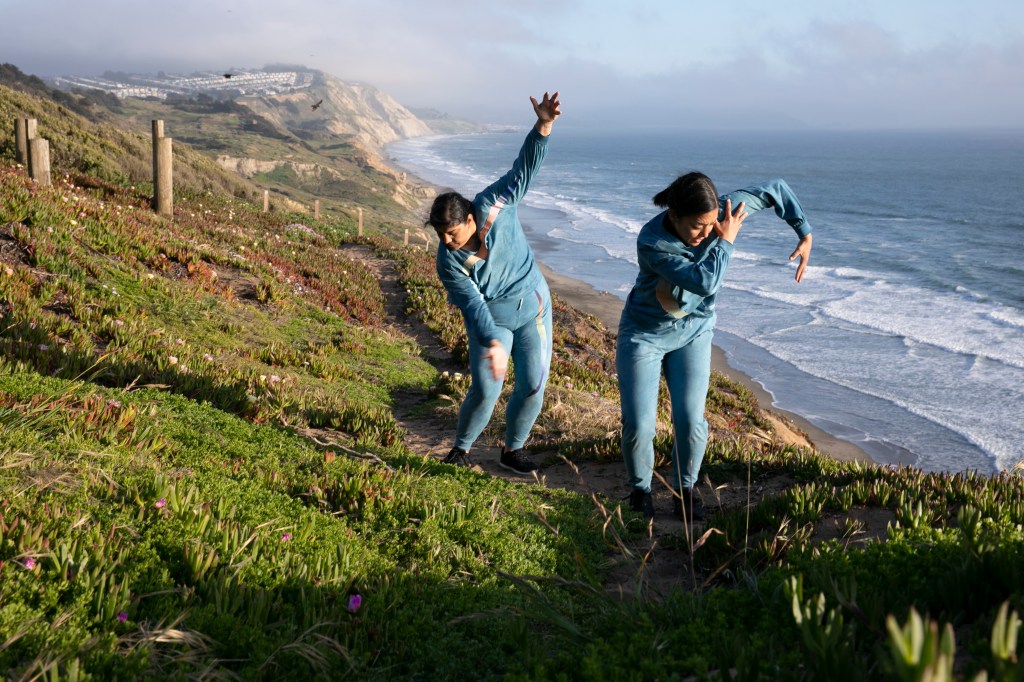
I’ve been working toward this project for the last two years. After I finished my last project, fault lines, which really felt like opening a portal to the past to return to homeland, I wanted to travel into the future. I wanted to imagine forward in time, but also acknowledge that forward is a fallacy because time (at least the way I see it) is a spiral rather than a line. I started developing a solo work in 2023, and then at the beginning of 2025 I started building the quartet sections of the work.
wild light is inspired by Donna Haraway’s speculative work that moves through climate disaster to imagine one way that human and more-than-human species survive. I’m really interested in queer of color futurism and how to imagine beyond the confines of our time and place.
The most exciting part of the project is the collaborative, making experience. I love getting to work with such a talented group. All of the dancers–Catalina, Maxine, Ai Yin, and monique, my sound collaborator, Rachel, visual artist Sa’dia, and lighting designer Jessi have come together looking toward the same vision, and it’s just been brilliant to see everything come to life. I’m so in awe of everyone’s genius!
The greatest challenge to creating work right now (and I know this isn’t a unique to me challenge) is funding and how the arts are valued in society. The stakes are so high, the funding is so scarce, many are fearful of what is to come, and I think that that has made it precarious to commit to practices of making art. For this project, we anticipated we had a good shot at a number of funding opportunities that we were not awarded, and that has made it challenging to make choices and priorities for what the company can actually accomplish with the show. I am truly so grateful for community/individual donor support and for the granting organizations that are funding the project, it’s just a tricky time.
Last performances you saw that really inspired you, or linger:
Akram Khan’s Until The Lions has haunted me for years. I took a master class with two of the cast members the day before seeing the show, and something about the storytelling, the reimagining of a myth that I’m quite familiar with through the lens of female characters, the intersection of contemporary dance and classical dance, and getting to embody the practice…it all continues to haunt me.
Lemi Ponifasio’s Birds with Skymirrors has stuck with me too. Lemi made this work after looking at trash washed up on Kiribati, I believe, and is reckoning with the impacts of pollution and climate on the most underresourced areas of the world. It’s intense, but oof it’s good.
Samita Sinha’s Tremor is another one that has stuck with me because the performers are both sounding and moving, and the piece moves slowly and with this aching kind of anticipation. It’s just so good.
I love performances that bring me into a different world. I so crave that experience of feeling like I’ve left this plane of reality while experiencing performance.
Pre-pandemic, you were a leader in the group Dancing Around Race. This cohort really brought racial equity questions to the foreground for the first time in the Bay Area. I know, personally, those public gatherings were life changing. Do you see the longstanding impact of Dancing Around Race? What questions can you pose to the field today?
DAR came about during such an important and necessary moment and I’m so grateful to hear that you were impacted by the work! It’s interesting to see what has transpired in terms of racial equity since 2018. It’s been a strange thing to see the kind of hard swing away from racial equity in the wake of increasingly oppressive politics.
I think the evergreen question to me is: what are you willing to risk or give up for the sake of the survival and thriving of everyone, with those who experience the greatest oppression at the fore?
For folks getting to know your writing more, please share links to a few articles (or podcasts):
A scholarly article published in Refractions Journal on social dancing as a tool to colonial-wash racial relations in Bridgerton: https://www.refractionsajournalofpostcolonialculturalcriticism.com/patel
And a podcast! https://creators.spotify.com/pod/profile/eva-yaa-asantewaa/episodes/Bhumi-B-Patel-This-world-needs-queerness-e2h99ev
Final Thoughts: Hope/belief/love of the profession:
I vacillate between hopeful and discouraged, but I think we are so lucky to do this, to have found movement, to be able to connect with our bodies and with one another through our bodies.
—-
Other posts on Life as a Modern Dancer:
Blog Series: “Why improv?” (with Bhumi B Patel)
Somatic Writing Series: Bhumi B. Patel, Andrea Olsen, and Elizebeth Randall Rains

 Life as a Modern Dancer
Leave a comment