
© Philip Buiser
Hometown: Littleton, Colorado
Current city: New York, New York
Age: 41
College and degree: Teikyo Westmar University (BFA)
Graduate school and degree: University of Utah (MFA)
How you pay the bills: Dance creation,
performing, and teaching
All of the dance hats you wear: Dancer, choreographer, teacher, collaborator,
and mentor
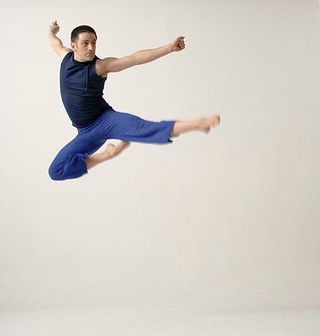
20s: I was introduced to contemporary dance when I first started
college. I was 18 at the time,
coming fresh out of high school having done a lot of musical theater. Shortly after I had started training in
modern dance, I found my love for it and decided to pursue it as a career.
My early 20s consisted of a lot of daily technique classes
in ballet, modern, and jazz. I
initially attended a small, private liberal arts college, "Tarkio
College" in Tarkio, Missouri, which was an extremely small town, so there
really wasn't much else to do there BUT dance. After two years, the school was forced to shut
down its doors as a result of being in debt to the government, so another
school, Teikyo Westmar University of Le Mars, Iowa, adopted both the Theater Arts
& Dance programs. So, I
attended Teikyo Westmar University for one year, but based on information given to me from my academic advisor, mentor and friend, the ballet
training that I was receiving from the university was suffering, so he
encouraged me to find another school.
I discovered Stephens College (which was an all women's college), of
Columbia, Missouri, in the spring of 1993, and quickly received an offer to
attend in the fall. There was a
small percentage of men who were given permission to attend the school, being
that both the Theater & Dance programs needed to have males in their
programs to help balance the yearly programming for each department. However, as great of a
year as that was in receiving terrific ballet training, the contemporary dance
training was not what I had hoped it would be. I longed to return to my training at Teikyo Westmar, as I
knew that that is where my heart belonged. So, the following fall I returned to Iowa to finish my
Bachelor of Fine Arts degree. It
was in attending these small, private liberal arts colleges that enabled me to
maintain a solid focus on my training without having many distractions. By the time I graduated with my BFA in
1994, I was approached by a representative of the University of Utah, who
expressed an interest in me, and asked if I would consider attending their
university dance program so that I could perform with their resident student
dance company, Performing Dance Company, as well as pursue my Masters of Fine
Arts degree. Initially, I was
thrilled at the idea of performing, but wasn't particularly in the mind set to
continue my university education.
After giving it more thought, I decided that it would be the right
fit. By choosing to go to the U of
U, it enabled me to continue taking consistent daily classes in both
contemporary dance and ballet. My
mindset was that I was building incredible momentum from the previous 5 years
of undergraduate training that I had been receiving, so the decision for me was
a no-brainer. My late 20s
involved me finishing my graduate work and then I moved into a year of
freelance work, creating my own dances as well as performing with other
artists/companies such as: RDT (Repertory Dance Theater), Keith Johnson, Sundance
Theater of Utah, Music Theater of Wichita, and Shapiro & Smith Dance.
30s: My 30s brought me more work of the same, although I had
been implementing a lot more teaching into my schedule. In 2001, I had accepted a position in
Doug Varone and Dancers which catapulted me to New York City. I moved to the city on September 10th,
2001, one day prior to one of the most memorable experiences that most of us
will probably ever have. It was an
emotional welcome to one of the most glorious places on Earth. Part of me felt like fleeing, but
truly, dance is what encouraged me to stay. I want to credit Doug Varone, as he wrote and sent a
personal letter to all of his company members shortly after that horrific day,
and eloquently communicated his thoughts as to what makes our lives as artists
important, even though in an instant (such as 9-11) it may appear to be so insignificant. It was an incredible
examination as to why our art-making and being together was important during
such an emotional time. (Thank you
Doug, I felt like I really learned something that day). Since then, the rest of my 30s had been much of the same — living in NYC and
I haven't looked back, enjoying being a performer, choreographer and
teacher.
40s: Turning 40 (and now being 41) has been an interesting
process for me as a dancer. I
remember back to when the great Martha Graham once said, "It takes 10
years to become a dancer"… she was right. Experience brings so much. I am thoroughly enjoying understanding my body. Many of the questions that I might have had earlier in my life, in terms of what specific issues my body may have been
experiencing and/or lacking, aren't as present in my mind. I feel more at ease with myself. At this stage of my career, as a
dancer, I don't hesitate to let my intuition take over and tell me what it is
that I need. If anything, I think
I am now more in tune to ask questions of others, to not be afraid to dig a
little deeper. Looking ahead, I
will aim to never stop dancing.

© Jamscid Eb
What’s on your plate – dancewise – for 2013?
Many things! I
have a work that will be premiering at the American University in Washington,
DC, as they commissioned me this
year to create a work which will be presented this April. I have a lot of rehearsals planned in
NYC for upcoming spring events. I
will be participating in the summer dance intensive at Tisch School of the Arts
(NYC), Jacob's Pillow Dance Festival, as well as performing in one of NYC's most beloved arts venues, the Brooklyn Academy of
Music. I've also recently picked
up a new winter/spring choreography project with The Dalton School, also here
in NYC, where I will be choreographing an ensemble work for fifteen 7th/8th
grade level boys. Aside from those
things, I have some other things in the oven, and I do hope they turn out! Mainly teaching and choreographic
opportunities. I'm enjoying being more and more on the outside of things these
days, but I never want to stop performing.
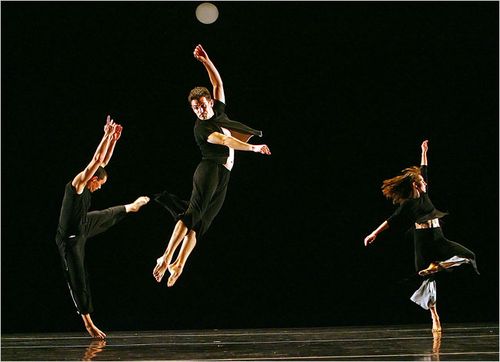
Photo: Doug Varone and Dancers;© Phil Knott
You have danced for many wonderful artists – Varone, the
Limón Company, Andrea Miller….how many gigs have you landed through a
traditional audition? If not an audition, was it a workshop, being seen in
class, etc.?
One of the wonderful aspects of dance is that it is a truly
closely knit community of people.
The art form, unto itself, is intimate and I feel that the directors
who lead these companies/ensembles are no different. I have had a good share of both attending formal auditions
(where I'm given a number and asked to stand in line) as well as receiving a
personal invitation to join a group.
The instances that involved an invitation were a direct result of either
having been seen in either a class and/or outside performance at one of the
many venues of which I have performed in.
Interestingly enough, I also found that some opportunities came my way
from making an effort to introduce myself to people… we've all heard of this
word — "networking." It
doesn't have to be a chore if you genuinely think about what contributions you
feel that you can bring into an artist's life. It's what we do — we create, and to do that your mind has to
be active.
Who are your “role models” or inspiration within modern
dance?
There are too many to name on a short paragraph, but I am
most drawn to artists (choreographers, teachers, and dancers) who strive to
find newness in what has already been created, to find solutions through
problem-solving and collaboration, and especially to those that don't let ego
take precedence over integrity and thoughtfulness for others.
What do you love most about performing?
I love being able to express myself fully and making a
connection with people through that process.
What do you love most about the rehearsal process?
I love seeing the languages of dance get pieced together
through the many trials and tribulations of dance making.
On training and care of the body…..
I love the adrenaline rush of feeling alive after having
exerted a lot of energy or to have executed the perfect relevé… it is a true
natural high. Now, on the other end of the spectrum, I love the simplicity of
letting the mind go, breathing properly into the body as rest is a very
important balance to all of the vigorous training that the body can take on.
More and more these days, I am a firm believer in cross training. For me, these
days, aside from my own teaching, I love running, light weights at the gym, and
taking yoga.
Non-dance activities important to you include…..
Reading current events, cooking, attending social events,
watching film, and mentoring others.
The role of teaching in your dance career:
I feel that teaching is one of the noblest things that an
artist can do… at least that's my opinion. I feel extremely blessed for the many teaching opportunities
that I have had in my career, many of which have included a wide range of age
groups (young children to the elderly) and venues (workshops, outreach
programs, fundraising events, after school programs, volunteer work, and
residencies. I think that the
teaching process has shown me that I have yet so much more to explore. It's not that I don't have anything to
say, but I am aware that as I continue to evolve as an artist, my philosophy
will continue to take form. I
believe that in order to be a true artist, one must never stop pursuing his/her
own education of the self.
Advice to young dancers on teaching, the role of teaching in
their dance lives ahead, and becoming a well-prepared teacher:
If it's possible, study directly with those who are
passionate about teaching, particularly if they have a style/philosophy that
you are drawn to. Go to your local
library or visit an online book retailer and pick up some well-documented
approaches on dance teaching and/or memoirs of those who have been highly
established. There is no single
way to teach in this art form and it will continue to evolve… what things are
important to you in technique, in performance, in just being? Planning is an essential tool for any
teacher; however, the more you do it, the more confident you become, to the
point where mapping out ideas for class becomes second nature. Do not be afraid
to be yourself!
Can you give a little window into how you prep for your
classes?
As a whole, I generally love to give every student of mine a
physical dance experience. I
carefully tailor each class to the level of which I feel it might be
appropriate to teach. For example,
if the students were beginners, I would not use advanced movement
material. Sometimes, though, I
find that students are able to take on more complex concepts/material, so in
those instances, I won't hesitate to alter the lesson plan and develop. Making a dramatic change in a class can
be a good thing as it presents problems for people to solve. You just want to
make sure that you're not drowning the fish, per say. Other factors like having a musician versus using my iPhone often times dictate, too, how I build a class and it
will change the amount of time that is needed to prep. Lastly, simplification I have found is
key. As a teacher, if you can
focus on one objective for the class, to serve as the basis and/or foundation
of what it is that you what to build on for that day, it will serve you well.
An idea from your college or grad school years that you
still think about/apply:
Oh yes! An important one… be aware of HOW it is that you
communicate to your students while teaching a class. Choosing the right words
(mostly politically correct words) is a must! The last thing you want to do, as a teacher, is offend
someone unintentionally. Now, for
all practical matters, we as teachers, are only human, and you might make an
occasional mistake along the way… it's okay, but the true measure of oneself
is learning and knowing how to deal with those future situations. Arm yourself (figure of speech)! I would encourage any aspiring teacher
to have a conversation of this topic with their colleagues and mentors.
Future career goals:
I hope to still be performing and choreographing at a very
late age. I see myself continuing
to be involved in education, whether that is committed to being involved privately
or in an academic setting, or both, I have yet to discover which I prefer.
Books, websites, blogs, shows that serve as inspiration:
http://www.nowness.com/?icid=overlay_home
This site is an award-winning editorial platform that serves as a
daily resource for the culturally curious by premiering inspiring stories from
the forefront of contemporary culture and global lifestyle every day.
A current choreographer who I am
curiously following now
Book title: How To Dance Forever: Surviving Against The
Odds by Daniel Nagrin
Current NYC show:
“SLEEPNOMORE”
A perfect example of how one can start
with a simple idea and literally, run with it.
Advice to dancers wanting to live and work in NYC:
Acknowledge the fact that as special/rewarding as New York
City is, it can be a hard place too.
I say that to not prohibit your curiosity nor to dissuade you from
exploring the city and its possibilities, but do not allow yourself to be jaded
into thinking that you can have success there without having a hard-working ethic
and an open possibility in your thinking that there will be the chance that
things may not work out how you hoped.
It’s a metaphor for life I guess.
I've given that advice a lot of thought… In my experience, I have come
across educators who praise NYC as being "the place to be for dancers"
without necessarily thinking about WHO it is that they are really speaking
to. I would encourage any dancer
who is considering making a move to the city, to allow himself/herself at least a year to
feel the city out. Also, be open
to finding a regular non-dancing job so that you can have a reliable nest
egg from which to pay your bills.
Advice to young dancers in general:
Allow the love that you have for this art form to empower you to be present in your studies, to ask questions on anything that you are unsure of, and to always take risks. It is okay to fail as you continue to find your path to artistic development. Seek advice from those who inspire you and never allow intimidation to stand in your way of achieving your goals. All artists, regardless of title and/or position, are only human. Please remember those things.


 Life as a Modern Dancer
Leave a reply to Jessica P. Cancel reply