From Blog Director Jill Randall:
I am thrilled to have the inspiring Debra Knapp join the blog with a new column entitled:
Inventing Our Lives: Debra Knapp on Teaching, Learning, and Careers in Dance
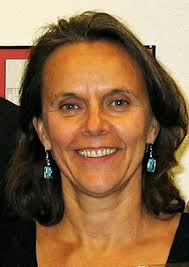
Dr. Debra Knapp is a Professor and the Director of Dance at New Mexico State University. She has danced professionally with Bill Evans Dance Company, Dresden, Germany’s Semperoper Ballet Company, Nora Reynolds Dance Company, Danzantes Dance Company, InMotion Dance Company, and Windfall Dancers. Debra has also been on the dance faculties of Butler University (Indianapolis, Indiana), Indiana University (Bloomington, Indiana,) University of New Mexico (Albuquerque, NM) and the Palucca School Academy of Performing Arts (Dresden, Germany).
———————-
Go Home
By Debra Knapp
I’m sitting here thinking about low enrollment at my university in the dance program. Currently we have 22 majors and 28 minors, and I am wondering why we are so low with our majors because just 3 years ago we had close to 50 majors. I thought we were growing. Now I am reflecting about why this might be happening. I feel like we have improved; we have great faculty, we have strengthened our classes, we’ve offered more variety of classes, we are very inclusive, and we have a new core curriculum that I think is pretty phenomenal, and yet we are low in enrollment.
So as I sit here contemplating, I hear an echo of voices saying, “My parents don’t want me to get a dance degree, but I can minor, because they want me to be able to get a job.” With our master’s program, I have students that say, “I don’t really need a master’s degree in dance. I need a master’s degree in something else, because you know with an MFA or an MA there’s not very many jobs out there for me in universities and so I need to find something else I can do and have dance as my hobby.” And then there are the dance professionals or dance faculty at a university level that say the same thing, “Why are we offering master’s degree level to students because there are no jobs. I can understand why students aren’t going into the dance profession — because they can’t make a living.” And then I look at all of us who have made a living dancing because we’ve learned how to invent our life.
So I guess my question is not, “Why should students become dance majors?” My questions become:
-Are we preparing them to help them invent their life?
-Are we proponents for students to follow their passion and be successful and have dance at the forefront of their life and not in a back corner as just a hobby?
When I lived in Germany, I was surprised at how many dance companies existed in very small towns. Most of them were ballet companies. There were opera, operetta, symphonies, and theater companies in so many of the small towns, and of course they were in all the major cities. I was impressed that the German culture so valued the arts. So one of my goals is to convince students to go back home.
Come and get your degree; come and get your master’s degree, but not because it gives you a job. You get to dance, you get to learn, you get to explore new ideas, you get to practice your creativity, you get to learn history. You find a foundation that builds your belief statement — a philosophy of why dance is so good for the human being, the human spirit. Then you take that home with you and you start something special.
At universities, we need to teach our students that the end all is not to be in someone’s company. It’s to go home. It’s to get your community dancing. It’s to bring the model of concert dance studios to their community that include all ages, multiple generations of dancers on stage that perform pieces of choreography that pertain to that age. People are searching for personal meaning — all ages — and to give people an opportunity to express themselves through movement helping them make meaning out of their life experience. It would be wrong to think that a four year old and a five year old don’t have anything to say because they have lots to say. For the people who want to dance who are in their seventies, their dances could be so amazing and so full of insight and spirit. When dance graduates go home, they can have studios that engage students in co-creating learning spaces that integrate technique with principles of design, choreographic principles, invention, and creativity. Having a studio that offers opportunities for students to collaborate and co-choreograph allows the human spirit to soar. Co-creating dances with students of all ages will give the audience a diverse, entertaining, and thought provoking experience.
This studio does not exclude having all forms of dance. It doesn’t just have to be modern dance; it can have amazing jazz, tap, ballet, flamenco, ballroom, African dance, and more. Recently I was teaching at Saint Mary’s College (Moraga, CA), and one of the women taking my master’s course in critical pedagogy was told that she was going to teach a Broadway dance class at her middle school. For her pedagogy project she chose to look at Broadway musicals through a social justice lens. To teach Broadway dance not only as a form of entertainment, but to also teach students how to unpack them and find all of the messages that are within the musical, allows students to interpret the dance phrases and give them context, moving them beyond the steps so that they can become the work. Just taking the musical Hairspray gave her many topics for students to investigate. Could this happen in a studio? Why not?
I have been to and participated in many recitals, and I am not sure that they prepare our audiences for concert dance. When parents come, for the first time, to a university or professional dance performance after being in a studio that does recitals, they don’t even know how to see it, how to feel it, or how to talk about it. I’m not sure that parents and their dancing child know how to talk about it at home because we don’t give them the tools in a studio that we give them in college to make meaning out of what they are seeing. We give the tools for students to know how to do book reports and how interpret what the author is saying, but for dance we don’t do that. When we look at movies we find meaning, make meaning, associate, synthesize, but I’m not sure we are teaching that to our young dancers, and that’s why I think it’s very important that college programs prepare dancers to go home and create an environment where dance is worthy of the recognition as an artistic expression of human behavior.
The studio could also become a hub for outreach projects. The studio could reach out to public schools to start before or after school dance programs, offer classes at preschools, senior centers, juvenile detention centers, at centers for domestic violence or for the homeless, and at recreation centers. We shouldn’t only ask people to come to us; we should find creative ways to dance with people on their home turf. And, the studio could be the home of a performing company that tours in their home state. Preparing students for the stage is great but if we want a dancing community, we also need to prepare our students to give equal billing to site-specific work. Go into malls, dance outside, in public schools, in libraries, in galleries, in parks, and at senior centers. Going home can open a world of possibilities.
Then when a parent asks, “How will my child make a living dancing?”, we can say that we will teach them how to invent their life. They don’t have to wait to find a job; they won’t be a stranger in a strange land. They will be home, with family and friends who love and believe in them and can help them become entrepreneurs. Parents know that any profession takes time, hard work, and passion. Dancers have these traits in abundance. Give a dancer a chance and she will make something beautiful, inspiring, and lasting out of thin air.
———————-


 Life as a Modern Dancer
Leave a reply to Dana Lawton Cancel reply