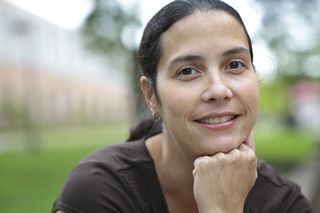
Hometown: Nashville, TN
Current city: New York, NY
Age: 49
Attended an arts high school? I attended a college prep school (Harpeth Hall) in Nashville that also has a strong arts program, but I took more professionally oriented technique classes and performance opportunities outside of school, first at the Metro Parks Dance Division and then with what is now Nashville Ballet. I also attended the performing arts high school, National Academy of Arts, in Champaign, IL for one year after graduating from high school. It is a bit of a long story, but I had mono with hepatitis complications the summer after I graduated from high school. I was hospitalized for a while and lost a lot of weight. I had a long recovery process. I was supposed to go to the University of Utah as a ballet major that fall, but I was not well enough. I went to National Academy of Arts around the middle of October as a post–grad. There were several of us. It worked well because I needed tons of sleep. I would sleep all morning when the other students had academic classes, then dance all afternoon and into the evening. Then come home and eat dinner and sleep some more. So I had my recovery time, but also excellent dance training. Petrus Bosman was there as well as Robert Dicello, and Nina Youshkevitch.
College and degree: Juilliard, BFA
Graduate school and degree:
MA in Dance Research and Reconstruction from 1990-1993 at The City College of New York. I started when I was 24 and finished when I was 27. I also got married that year.
PhD in Dance and Dance Education 1996-2006 at NYU, Dance Education Program. I was 30-40. My husband and I had two children during this time period!
Website: http://www.montclair.edu/profilepages/view_profile.php?username=mcphersone
How you pay the bills: My job as an Associate Professor in Dance at Montclair State University is my steady full-time job. As part of my work there, I am expected to continue my research practice. I have written 2 books, written numerous articles and reviews, worked on a documentary film, and I choreograph and stage dances from Labanotation. I was the Ketchum Artist-in-Residence at Sarah Lawrence College for the fall of 2015. I am also the Executive Editor of the journal Dance Education in Practice. These other jobs supplement my main salary.
All of the dance hats you wear: Teacher, administrator, writer, editor, choreographer, stager of dances from Labanotation, secretary for the Martha Hill Dance Fund, member of the professional advisory committee of the Dance Notation Bureau.
Non-dance work you do: Volunteer work for my children’s schools when I can. I particularly like going on field trips, and my husband and I wrote and compiled the Art Studio newsletter for LaGuardia High School last year.
———————-
Describe your dance life in your….
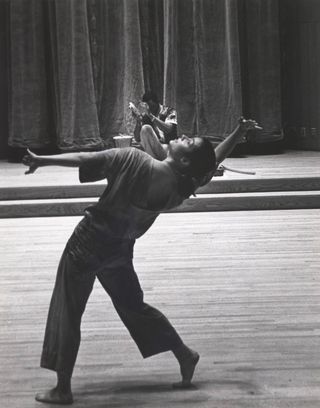
20s: I finished my BFA at Juilliard when I was 24, and started my MA that same year, graduating when I was 27. I performed with various independent choreographers and companies including Ernesta Corvino’s Dance Circle Company and Avodah Dance Ensemble. I taught dance in various studios and community settings including Henry Street Settlement House and Chen and Dancers. I began teaching at City College as a teaching fellow in 1991 when I was 25.
30s: I began my PhD at NYU the year I turned 30 and finished the year I turned 40. I was still performing with Ernesta Corvino’s Dance Circle Company and Avodah Dance Ensemble and other choreographers like Yael Lewin and Oona Haaranen until 1998, when I was 32. I performed with Omega Dance Company in 1999. I was teaching still at Henry Street Settlement House and Chen and Dancers as well as teaching as an adjunct at Long Island University-Brooklyn campus and as a teaching fellow at NYU, then later an adjunct. I took a full-time position teaching dance in the elementary school of Convent of the Sacred Heart in 1998 and stayed there until 2004. I then took a part-time position as movement teacher at Fieldston Lower School until 2008. I staged 3 dances from Labanotation during this time period too. My first article was published in 2005 in the Journal of Dance Education.
40s: I taught at Fieldston Lower Elementary School and Long Island University-Brooklyn until 2008 and 2009 respectively. I took a full-time position as a professor at Montclair State University in 2008. I continued to publish articles and reviews. My first book was published in 2008 and my second in 2013. I staged a number of dances from Labanotation. I taught part-time in the graduate program at Purchase College for 2 years, and was artist-in residence at Sarah Lawrence College for one semester staging Anna Sokolow’s Rooms. I began editing the journal Dance Education in Practice in 2014.
I will turn 50 in May!
Major influences and mentors:
Alfredo Corvino, Ernesta Corvino, Andra Corvino, Anna Sokolow, Ethel Winter, Laura Glenn, Margot Ely
Can you talk about your time getting your masters and PhD? What was your area of specialization? How long did it take to complete your PhD?
When I graduated from Juilliard in 1990, two of my teachers (Carolyn Adams and Jill Beck) were teaching at City College too. Jill suggested to some of my graduating class at Juilliard that we might want to take a class or two at City College, and that is how I started my MA degree. I love learning, and I had the time. The MA degree was in Dance Research and Reconstruction. We worked a lot with Labanotation: learning, staging and performing recorded dances. After my first year, Jill suggested that I apply for a teaching fellowship and speed up my progress towards completing my degree. I received the fellowship and began my career teaching in higher education with the course Aerobic Dance! I graduated in 1993.
I started my PhD at NYU in 1996 and completed it in 2006. In 1996, I was seeing the end coming to my active performing career because of injuries as well as that my husband and I wanted to start a family. I wanted to have a more stable life before I had children. I was hoping for the possibility of teaching full-time in higher education but knew that without having danced with a major dance company, I probably needed a PhD to make that possible. I also just wanted to pursue more study of dance and education, beyond technique. I applied only to NYU because my husband and I wanted to stay in NYC. I was fortunate to receive a teaching fellowship. My PhD is in Dance and Dance Education/Teaching and Administration in Higher Education. I originally though I would write my dissertation on something to do with Labanotation but quickly decided to focus on Martha Hill instead. She was the founding director of the dance programs at Juilliard and NYU, and had passed away in 1995. I became fascinated with oral interview and personal story while taking qualitative research courses with Margot Ely. Interviews with Martha Hill’s students became the center point of my dissertation and later book.
Current training practices and care of the body:
Alexander technique, T’ai Chi, Yoga
Are you performing and choreographing in 2016?
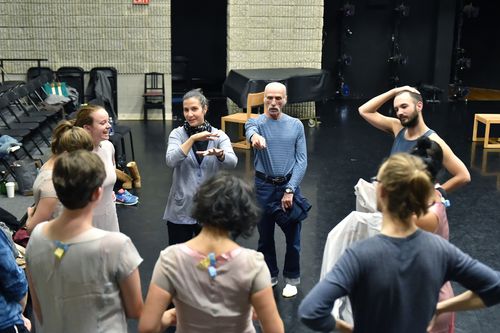
I will probably stage another work from Labanotation. Projects are in discussion but not yet finalized.
What else is on your calendar for 2016?
Two book projects; teaching; attending and hopefully presenting at the National Dance Education conference and the Society of Dance History Scholars special topics conference on Contemporary Ballet. I am also part of a Graham Deconstructed event with the Martha Graham organization scheduled for Feb. 10, 2016. The event will focus on the creation of Graham’s work Panorama. It premiered at The Bennington School of the Dance, the topic of my recent book. Montclair State University students will perform Panorama, and we will also show archival photos and video footage as well as having copies of my book available for purchase.
Please share about your interest in writing on dance and the accomplishment of publishing several books.
I first found my voice as a writer in a humanities course at Juilliard. The professor (James Allen) allowed us to be creative with our papers like having Don Quixote and Freud having a discussion at a cafe. This blending of reality and fantasy to explore philosophic ideas allowed me to be creative and to begin to enjoy writing rather than it just being a task that had to be done. Later on, when writing my doctoral dissertation, I worked extensively with Margot Ely, who again encouraged creativity in writing. My dissertation explored personal voice and personal story, and as I was writing it, I found that I really liked writing. I published a couple of articles in the Journal of Dance Education that were about my experience and practice in teaching dance in elementary schools. I then wrote an article about Martha Hill, the focus of my dissertation, for Dance Teacher Magazine. And from there, I just kept going.
My first book, The Contributions of Martha Hill to American Dance and Dance Education, was a re-working of my dissertation. My second book came right out of my research for the first. In delving into Martha Hill’s collection at the Juilliard library, I came across writings she and Mary Jo Shelly had done on the Bennington School of the Dance. They had started a book that was never published. Working with their writings as a starting point, I began to put my next book (The Bennington School of the Dance: A History in Writings and Interview) together. I collected existing writings by participants at the school and performed interviews with students from the school to tell the story through the voices of people who had been there. What was it like for them? I am still fascinated by personal voice and story. My current book project, with a former New York City Ballet soloist, tells the story of her life as a child actress and then professional ballet dancer.
Advice to dancers who are wanting to get into writing.
Practice your writing like you practice your dance technique or choreography. You might keep a journal, blog and/or begin writing reviews of concerts, dance films, or dance books. The more you write, the more fluid the process is and the more confident you becomes in expressing yourself through words. Choreography and writing have similarities in terms of form and structure.
Can you share a little about re-staging choreography from some of the modern dance pioneers? What is it like re-staging when so many young dancers know little about pioneers like Weidman and Sokolow? Does re-staging allow dancers an embodied way into learning modern dance history?
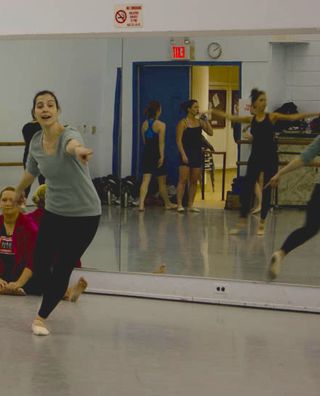
I am passionate about staging dance works. A dance only really “lives” in performance, so it is vitally important to the dance field that older works continue to be performed. I try to make the history of a work come alive for the dancers and also make it a fresh experience for them, so they can really “own” the work. When I am staging a dance, I have almost always been able to bring in either the choreographer, or someone who knew the choreographer well, to coach the dancers. I think that the dancers feel more connected to dance history from embodying the work. When you are literally in the choreography, you learn so much about the choreographer because it is their artistic/personal expression that you are embodying.
The role of technology in your dance life:
I use Facebook a fair amount. I also have a Linkedin account, but use it less frequently. I market myself through both of those accounts as well as through my Montclair State University profile page and my Amazon Authors page. Others ways I use technology — I do a lot of preliminary research online when I am working on an article or a book. Some of my articles are available online. My pre-teen and teenage daughters help me when I have questions about technology!
Final thoughts: Hope/belief/love of the profession:
I have been obsessively involved with dance most of my life, and I feel blessed to have a wonderful career that covers so many areas of the dance field. I hope for the future that the dance field will carry our past with us as we move forward into whatever comes next. All of the revolutions and evolutions that have molded the dance field into what is it today are its backbone.
————-
Related posts:
The 2015 Virtual Writers' Workshop for Dancers
Artist Profile #122: Banning Bouldin (Nashville, TN)
—————————–


 Life as a Modern Dancer
Leave a reply to Nancy Lushington Cancel reply