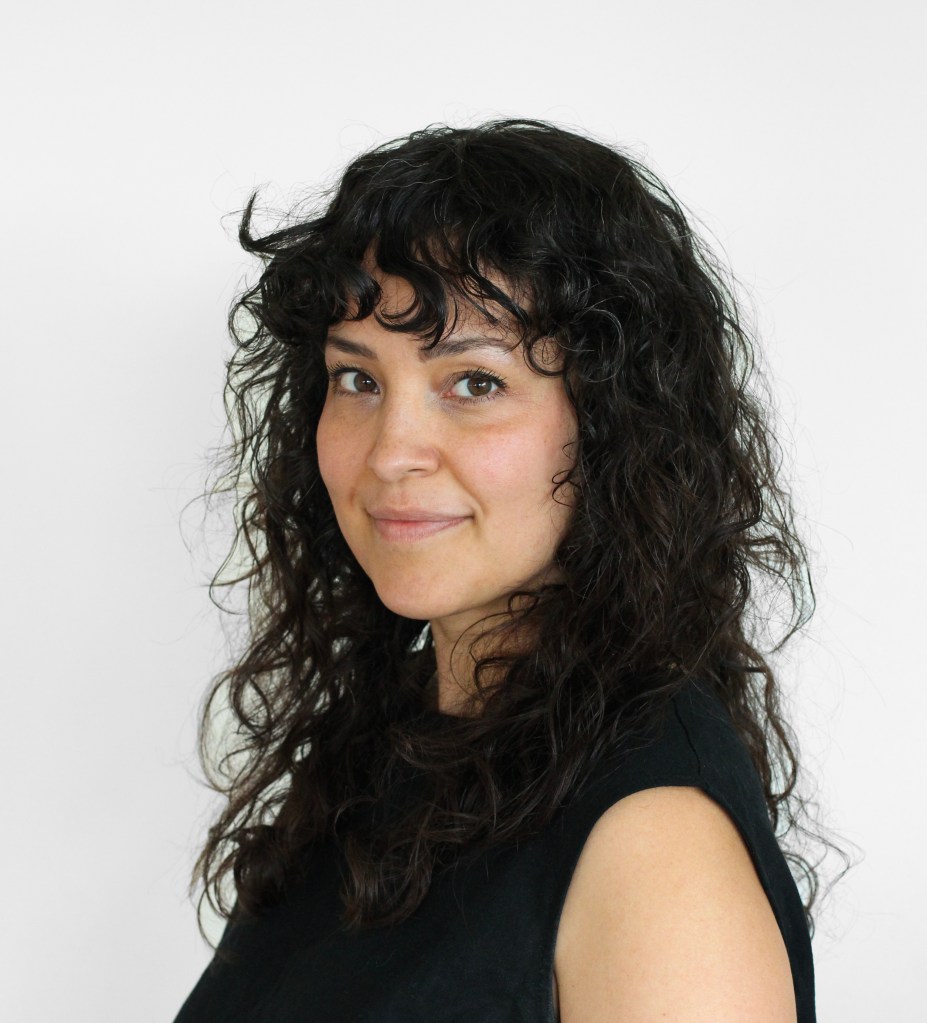
Hometown: San Antonio, TX
Current city: Salt Lake City, UT
Age: 38
College and degree: Brigham Young University, BA in Dance
Graduate school and degree: University of Utah, MFA in Modern Dance
Website: roxannegray.co
Social media: IG – @roxannegray.co, @801.salon, @playground_danceproject
How you pay the bills: Freelance and part-time work in dance, arts administration, and arts programming!
All of the dance hats you wear: Adjunct faculty at Westminster University; Founder and Director of PlayGround Dance Project; freelance choreographer and producer.
Non-dance work you do: Founder and Director of 801 Salon; Public Programs Strategist at the Utah Museum of Contemporary Art
————-
First few years post-college:
After graduating with my BA, my husband and I moved to NYC. We were interested in a new adventure and a new community. We were living in Brooklyn and working in Manhattan. I worked for an experiential marketing company called TH Productions, which produced pop-up activations around the city for large brands. Back in 2012, it was difficult to find work in a new city. The original position was posted on Craigslist—a volunteer role assisting at a NYFW event. After accepting a short internship, they eventually hired me as an Assistant and Associate Producer. I only worked with the company for a short while, but it was an empowering experience to try something new. I like to tell this story to students in university settings to remind them that they have many valuable skills as creatives, especially in the performing arts. They are problem solvers, creative thinkers, and often self-directed. These were all assets that served me well in another industry, and were recognized and valued.
I didn’t have a lot of free time to put towards a dance creative practice at the time, and this led to a long hiatus from the field of dance. I feel that my undergraduate experience set me up with a somewhat traditional view of dance as an art and what a career in dance or the arts could look like. It felt like I could be a professional dancer or a professional choreographer, and neither was presented to me as an accessible option. It was difficult for me to develop a personal practice within this narrow view. Since my interests did not fall into the categories I had been presented with, I figured my “dance career” was over. It took me several years and the opportunity to meet other folks in the field before I was able to redefine these views and discover what actually interested me about dance.
Mid to late 20s:
In my mid-20s, we moved to Berkeley, CA! The Bay Area will always be a special place to me. We lived there for 8 years—it’s where I redeveloped my creative practice, and also where I started my family. I have three kids, all of whom were born in Berkeley. During the first few years, much of my time was spent with my kids as the primary caregiver. I also taught children’s classes at various local dance studios, including Montclair Dance Athletics and Cerrito Dance Arts Center.
The Bay Area really became a playground for me. It was inspiring to be surrounded by such a rich dance scene. I hadn’t taken a class for myself in years, but suddenly I was welcomed into spaces like Shawl-Anderson Dance Center and ODC, surrounded by community. I started attending local performances and salons, and plugging into a community that was experimenting and pushing boundaries. I made opportunities for myself to choreograph through freelance projects. A big part of this shift for me was meeting other mother-artists who were making pathways for themselves in the field. I performed in local works by choreographers like Stephanie Unger and Tara Pilbrow, who were also mothers and whose work was shaped by those experiences.
This time in my life was such a rollercoaster for my relationship with dance and my body. My children were born about three years apart, and each pregnancy brought discoveries and challenges. But, I recognized that moving and developing creative research was important for my mental health, even if projects could only be taken on in small doses.
Early 30s:
In my early 30s, I developed an interest in pursuing an MFA. I was insecure about my limited dance career thus far. I had taken a lot of time away from dance, and spent the last few years raising kids and freelancing very minimally. I would see other artists, choreographers, or educators the same age as me with vastly different lives and careers.
So, I set goals for myself to further develop my creative practice towards the possibility of applying for a graduate program in the future. I worked towards building out time, setting aside energy, and earmarking funds towards projects and research. I made small goals like: attend “x” number of local performances, create “x” number of pieces, read “x” number of articles/books, attend “x” number of classes, etc. I started up a daily improvisational practice in my living room, taking videos on my phone for accountability.
In 2018, I completed a SAFEhouse residency, supported by a CA$H Dance Grant. It was the first time I was given the time, space, and funds to see a project from start to finish on my terms. PAIR was presented in a split-bill show, in collaboration with six dancers and three composers. This project helped me to realize my deep interest in collaborative processes and gave me confidence in my abilities as a director.
Mid 30s/post MFA:
In 2020, during the COVID-19 pandemic, we moved to Salt Lake City, UT. As it was for all communities, the pandemic was a difficult time for my family. My husband lost his job right before it hit, and we were living in a two-bedroom home with three young kids in Oakland. The move to SLC would offer stability, but meant we would be leaving a beloved community behind.
In 2021, I founded 801 Salon shortly after we moved to SLC. I was hungry for community and inspired by my years in the Bay Area. 801 Salon is a multidisciplinary art salon which produces pop-up art exhibits and performances around SLC. We are now a 501(c)3 nonprofit organization and have produced 43+ shows since 2021. We have also developed annual programming such as the 801 Art Book Fair and PlayGround Dance Project, a choreographic flash incubator. My work with 801 Salon made me realize production, direction, and collaboration are important parts of my creative practice.
In the same months that I founded 801 Salon, I also applied for graduate school at the University of Utah and was accepted into their Modern Dance MFA program. Running a nonprofit organization while completing a graduate program was a huge undertaking, and I often joke that I completed two masters during that time. But it helped me to shape a career that included all of my interests. I received an MFA in Modern Dance, as well as a Screendance Certificate. I was also awarded a Teaching Assistantship and had the opportunity to teach a variety of undergraduate courses.
Now:
Since graduating, I have been teaching at Westminster University as an adjunct in the Dance Department, directing 801 Salon and PlayGround Dance Project, continuing my research and scholarship, and most recently working as a Public Programs Strategist at the Utah Museum of Contemporary Art. It has been a fun but difficult time, continuing to discover what it is that makes me feel fulfilled within the field of dance and arts administration. I’ve learned that having my fingers in so many pots is not sustainable, and I’m working towards defining a career that better suits my needs post-grad school. Grad school was a wild whirlwind of self-discovery, but it’s taken me a bit of time to step off the treadmill of grad life and allow my nervous system to readjust and exit survival mode. I look forward to finding a happy medium for myself.
Current movement practices and care of the body:
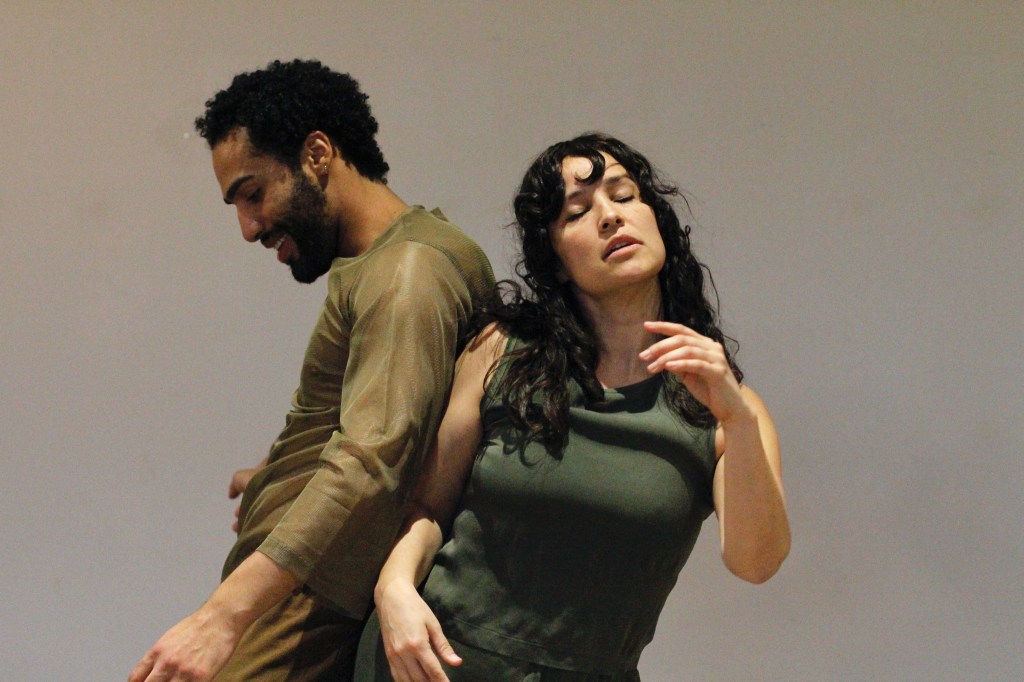
I have found it very helpful to develop additional movement practices outside of a concert dance studio. I make it a point to move outside every day, whether that’s a hike in the canyons, snowshoeing with friends, or a trail run by the creek. It helps to clear my mind and open my field of vision.
I have also found it useful to connect with dance communities outside of Western concert dance spaces. Over the last few years, I have joined various class communities, specifically local Folklórico or Flamenco groups. These are the class communities I grew up in, and remind me how important it is to bring these culturally specific pedagogies and approaches into my own teaching.
Where are you teaching this academic year? What do you love about teaching?
I am co-directing the Westminster Dance Company, which is a performance credit for undergraduate students. The class offers the opportunity for students to participate in various creative processes, all of which culminate in a concert at the end of the semester. I love teaching this course because I get the opportunity to choreograph with the students, but also because I get to witness these students rise to the moment.
I love teaching because I love mentoring. I love teaching in higher education because it is inevitably a diverse community, full of varied experiences and backgrounds. I enjoy meeting students where they are, helping them shape their educational journey, find what they are passionate about, and witness them making connections.
Can you talk about your time in graduate school? How long were you in school? What were some of the highlights? What did your thesis explore?
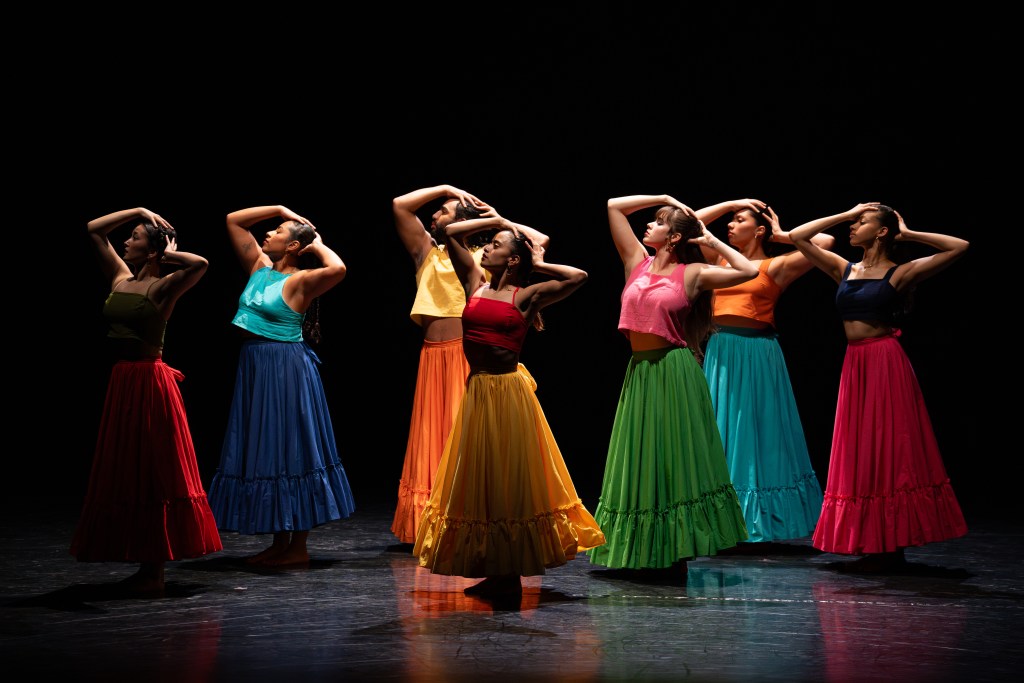
My graduate program was officially two and a half years, although much of my thesis editing occurred during an additional semester. During my time at the U of U, my research was centered around the development of a borderland creative practice utilizing Mexican Folklorico dance and modern dance. I was not interested in creating a hybrid dance form, but rather a creative practice rooted in my borderland identity as a Chicana, biracial, and bicultural individual. Having the time to dive deep into this research through choreography and scholarship was hugely impactful for me. The research was vulnerable and asked me to crack open old wounds. But, I had the help of many historical Chicana Feminist theorists, my incredible mentors, Dr. Joselli Deans, Kiri Avelar, and Pablo Hernan Piantino, as well as an all-BIPOC cast who truly grew into a family. I graduated in May of 2025, and my work, Nepantla, was presented at the American College Dance Association National Festival in Washington, DC. I have also presented this research at various conferences recently, including the Dance Studies Association Conference, 2025.
Do you have any choreographic or performance projects in the works for 2026? What are your guiding questions and curiosities?
I have an interest in developing some of my recent choreographic work into explorations through film. Two of my recent works, Nepantla and Rasquache, offer a commentary on the Chicanx experience. And while I am proud of both works, I have always felt that they don’t necessarily belong on a Western concert dance stage. I would love to take some of the movement, images, and themes into Chicanx communities here in SLC, or possibly even in my hometown, San Antonio, TX. I have had the privilege of working on an ongoing film documentary about my mother’s folklorico dance journey back home, and this work has inspired me as I place this creative practice in those communities.
Please share a bit about your collaboration with Little Moon! How did that come about?
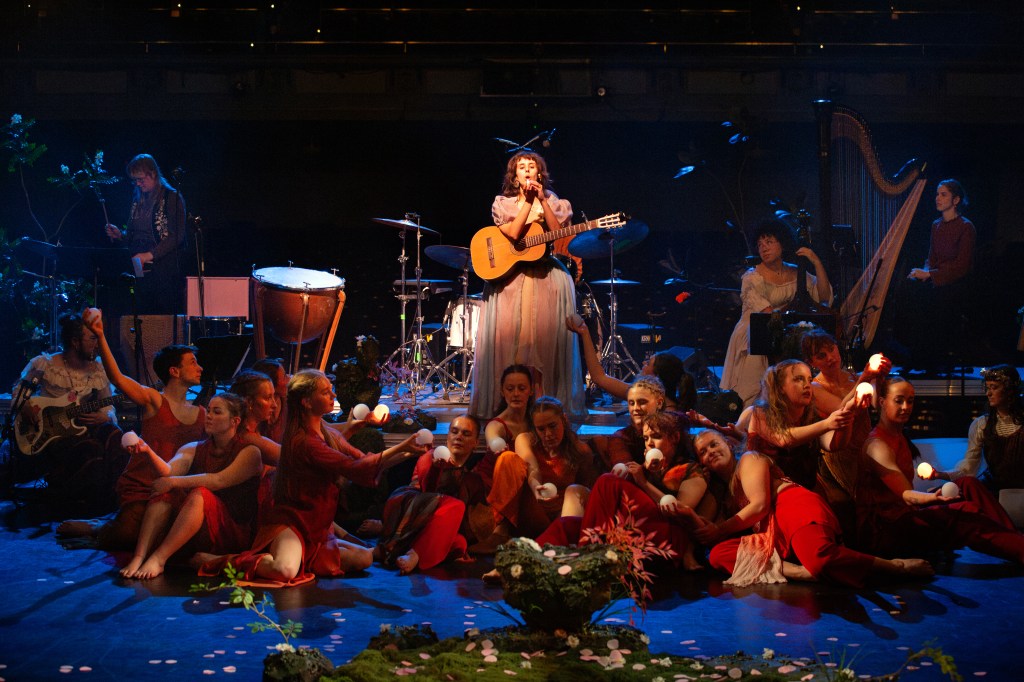
Almost two years ago, UtahPresents contacted me about a possible collaboration with 801 Salon. UtahPresents is the presenting platform at historic Kinsgbury Hall, which brings national and international performances to Salt Lake City. They also host a really incredible program called Stage Door Series, which invites local artists to create in residence at Kingsbury Hall. They offer the theater for one week, their technical team, and a stipend, and the only direction given is that the audience must enter through the stage door and sit directly on the stage.
When they approached me, they offered to let me curate a show, and I pitched Little Moon as the featured artist. Little Moon is a local music group that had recently won the NPR Tiny Desk Concert. Along with Little Moon, we brought in dancers from the University of Utah, and many fantastic local artists, directors, and collaborators. The show was immersive and transformative, taking the audience on a journey exploring myth and community.
I was very interested in intentionally setting up a collaborative model that would support all of the artists—building systems of communication, while also allowing for flow and flexibility. Little Moon wrote an entirely new album for the show, while the creative team began to build visual concepts over the course of a year. As for the movement, I wanted to experiment with a flash process that would allow the dancers to co-create and tune into a greater creative consciousness within the project. The week before we went into the theater, we received the full demos of the music. We built out improvisational structures that would allow the dancers and musicians to collaborate in the moment, and keep the show feeling fresh and alive. It was such a beautiful process! I am truly grateful to everyone involved.
Last performance or art event you saw that really inspired you, or lingers:
When I was in Minneapolis last week, I had the opportunity to see an excerpt of Girl Magic by Emily Michaels King. It was an incredibly powerful one-woman show, beautifully crafted and vulnerable in content and performance. I especially loved her use of light and music, and her ability to transition and hit moments of emotional impact with clarity. I would love to see the full-length show.
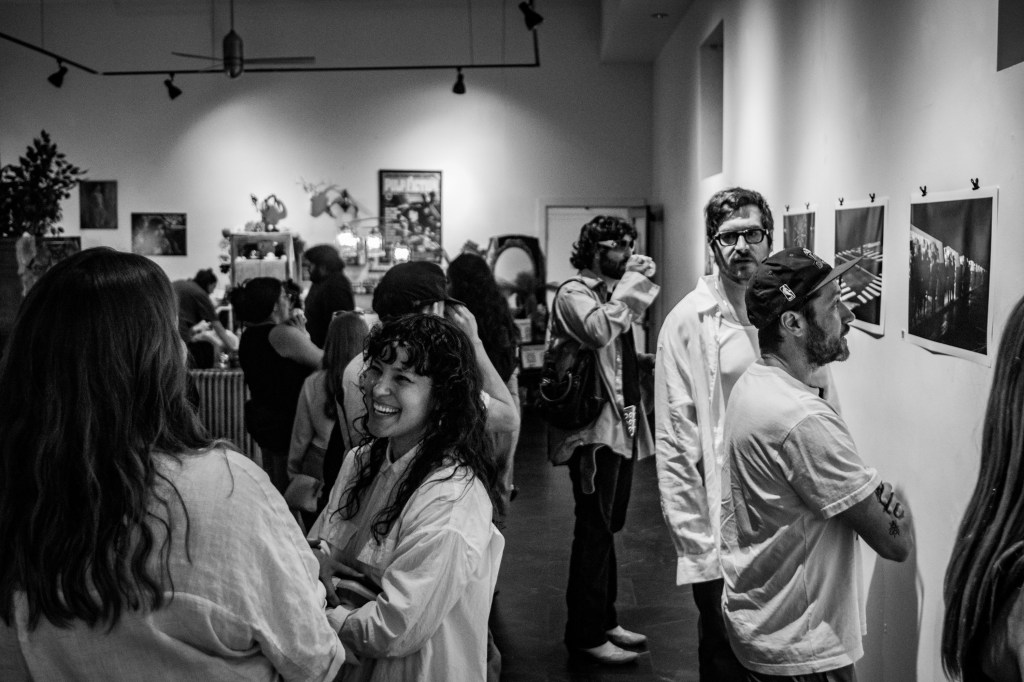
You founded the nonprofit organization 801 Salon. What is the mission and vision for it? And, folks are always curious…how easy or difficult was it to get 501(c)3 status?
801 Salon is dedicated to making art accessible to the community. We produce multidisciplinary pop-up art exhibits and performances around Salt Lake City, providing a platform for local artists to show their work. We provide resources and remove barriers for artists to present work in non-traditional, inclusive, and financially accessible ways. We do this by partnering with small businesses and local spaces that donate space for our shows. We prioritize marginalized, underrepresented, and emerging artists in our curation. Our mission is also two-fold: providing accessible ways for artists to show work, but also providing accessible art experiences for community members through free or low-cost admission, situating our pop-ups in neighborhoods throughout Salt Lake County.
The vision is to convince artists that work can be shown in so many ways, and that creative limitations can actually offer potential for experimentation. I have had so many conversations with local artists who present me with reasons why they wouldn’t be able to do a show, or can’t make the work they want to do. Our job is to ask them, “Why?” And then offer the resources to help their visions come to life. By asking artists these questions, we ask them to consider where these limitations are coming from, who is placing those limitations on their creative practice, and how working outside of these limitations can shape their work.
We are now a 501(c)3 nonprofit organization, and have produced 43+ shows since 2021, supporting around 400 artists. We have also developed annual programming, such as the 801 Art Book Fair and PlayGround Dance Project, an annual choreographic flash incubator.
Becoming a 501(c)3 nonprofit was easy! It’s the maintenance of an organization that has been the challenge. The process of receiving status (for us) was fairly simple. The State of Utah offered very clear guidelines, templates, and pathways to nonprofit status. But running an organization is no easy task. We struggle with commitment levels of team members, a lack of business knowledge, and inexperience in the nonprofit world. We have had our ups and downs, but I have a firm belief that organic growth will keep us moving forward. We are fiscally conservative and only take on what we know we can immediately handle. The organization could definitely be larger and more stable, but we will get there. I would rather develop a slow growth pattern than bite off more than we can chew. If we want to be around in 5, 10, or 20 years, we need to make sure we can be around tomorrow. Our goals for the next year are centered around stability, sustainability, and ethical practices so that we don’t succumb to burnout as an organization. But, we are feeling grateful for the hunger and excitement the SLC community continues to show towards the work we do!
On life and work as a dancer and parent:
My relationship to parenthood and career has been a rollercoaster, but one I am very proud of. I was brought up in a high-demand religion, which places a lot of expectations on my body as a woman. Since transitioning from that faith, I have been able to navigate my life as a mother and as a woman with creative career aspirations with more clarity and care.
I always joke that my kids will grow up with a fever dream of a childhood. They will come to me with wild stories about color and shape and music, and I will say, oh yes, that was that one performance I did on the floor of a warehouse when you were three, and I was pregnant with your brother. I am so grateful to share my creative pursuits with them, and to see them developing their own creative interests.
I have recently spent some time reevaluating how I compartmentalize different spaces in my life. As a woman of color, I have been conditioned from childhood to compartmentalize parts of my identity. Early on in my career, I would often keep my family out of professional conversations. This was done to protect them and to protect myself. But, with time, I have found confidence in including them as a part of my creative processes and as a part of my creative journey. I am grateful for their support and for the support of my partner.
For folks getting to know your work more, please share links to a few videos, articles, podcasts:
You can find links to much of my recent creative work here:
https://roxannegray.co/
A recent peer-reviewed article here:
https://jfepublications.org/article/embracing-the-choque/
A couple of articles about the Little Moon show here:
https://www.dance.utah.edu/news/67vko1jjrcn7jcqu2d8p7yu1ul2ruw
Final Thoughts: Hope/belief/love of the profession:
I am continually inspired by community. Whenever I am feeling stuck or lost, I turn to community, whether it’s creating in collaboration with others, or witnessing others’ work. I feel that if we continue to care of each other and continue to connect in meaningful ways, the field of dance will always thrive and progress.
—
Related post:
A Contemporary Dancer’s Guide to Salt Lake City, UT


Leave a comment