Hometown:
Macomb, IL
Current city:
Oakland, CA
Age: 34
College and degree:
Western Illinois University – BS Psychology (1996)
Graduate school and degree: University of Iowa – MFA
Dance Performance (2005) at age 27
How you pay the bills: Teaching, administrative work
All of the dance hats you wear: Dancer, choreographer, teacher, administrator,
mentor/advisor, producer
Non-dance work you do: All of my current work is dance related,
but over the years I’ve done a lot of retail work!
————————
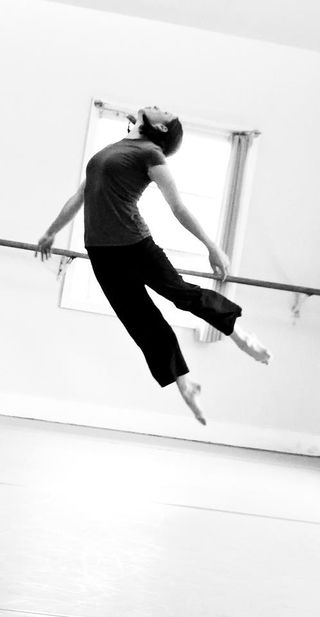
Photo courtesy of Paufve Dance; photo by Pak Han
Describe your dance
life….
5 years after college:
Five years after college I was
finishing my last year of graduate school. I took two years after college to decide that I wanted to
make a commitment to dance as a career and then went back to school to learn more,
develop stronger technique, and get my MFA. It was (and still is) hard for me to imagine dance as a
career. There is so much pressure
to get a “real” job and earn a stable income. I was in graduate school for 3 years and it was the best
time of my life. I learned so
much, was immersed in dance performance, choreography, and scholarship, and met
people that changed my life. That
third year gave me much needed confidence and the time to think about and plan
my next step (even though the plans changed!).
10 years after
college:
Ten years after college I somehow
found myself in the Bay Area teaching dance at the most incredible dance center
(Shawl-Anderson Dance Center) to adults and teenagers that I am completely in
love with. I was in my adjunct position
at the University of San Francisco, and I was dancing with three very powerful and
inspiring women (Katie Faulkner, Nina Haft, and Randee Paufve). My life wasn’t at all what I would have
guessed it would be at age 17 because I didn’t even know this life was possible
then.
Who are your “role models”
or inspiration within modern dance?
All of my teachers. Ever. I’ve had some amazing teachers (parents, dance teachers,
school teachers, peers, friends) and I wouldn’t be doing what I do now without
their inspiration and encouragement. Lately, my teens have been my biggest
inspiration. They show up to class
day in and day out working so hard, with such bravery because they love to
dance. They are incredibly open,
honest, loving and supportive and I want to be like them when I grow up.
What do you love most
about performing?
I have to say that my most favorite
thing about performance is being in the wings…either before the performance or
during the performance when I am not onstage…and being in the theater in
general. (I’m wondering right now
if I should have become a stagehand instead of a dancer…) I also love sharing what I do with
other people. In dance we work so
hard for so long in the rehearsal process and the classroom and very few people
get to share and experience that work with us. The performance is a chance to bring other people in and to
show them the tip of the iceberg.
What do you love most
about the rehearsal process?
I love puzzles and assignments and
figuring things out. I love being
in the same room with choreographers that I respect as people and artists and
watching them figure out how to make dances. I love helping people make dances. I love watching the other dancers and seeing the material
they develop and the improvisations they perform in the early generating stages
of the process. I love dancing
with other people and getting to know them through a creative process. I love to be challenged and learn
things about myself.
How have you landed
your performance gigs over the years – auditions, workshops, being seen in class?
All of the gigs (performance and
teaching and choreographing) I have been fortunate to receive over the years
have been the result of being seen in class, being recommended by a friend, or
begging. I did get one job through
an audition, but I feel like that was an atypical situation. For performance opportunities I have
taken class with choreographers whose work I admire and I have contacted
choreographers to let them know that I am very interested in their work and
would love to be involved in any way if an opportunity arises. Choreographers don’t know to consider
you if you don’t let them know you’d like to be considered. I know that this can sometimes feel
intimidating, but if you are kind and straight forward it is an incredible
compliment to someone to hear that their work is appreciated and that dancers
would like to share in their creative process. Hard work is very important because many jobs in dance are
never even posted or advertised, but filled through recommendation and word of
mouth. If you show up, work hard,
and do the best work you can do your name will start popping up on the
radar.
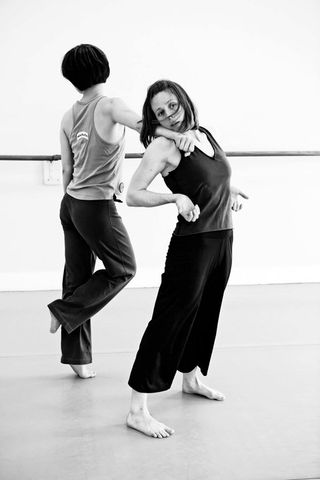
Photo courtesy of little seismic dance; photo by Pak Han
On training and care
of the body…..
I’m thinking about this a lot right
now because I am in my mid-30’s and things are changing. I’m trying to figure out how to take
care of myself, heal mild injuries that I’ve ignored over the years, and
continue to dance for a long, long time.
I think that training and caring for the body are very specific to each
individual. It is important to do
the things that work for you. I’m
a fan of acupuncture, massage, somatics, and resting.
Non-dance movement
practices important to you include…..
Yoga, walking/hiking, bike riding (for
enjoyment), breathing.
The role of teaching
in your dance career:
Teaching is my dance career. If I didn’t teach I wouldn’t be able to
eat, pay bills, and feed my book-buying obsession. If I didn’t teach I wouldn’t be satisfied with a dance
career. I love performing, but I
also love sharing my love of dance with other people.
Advice to young
dancers on teaching, the role of teaching in their dance lives ahead, and
becoming a well-prepared teacher
I think teaching is very
important. It is a way to earn an income in dance and it is the way that modern dance stays alive through
generations. If you enjoy teaching
dance it is important to seek out dance pedagogy classes and opportunities to
teach. Even if you don’t feel
ready or prepared, the only way to learn to teach is to do it. Offer classes to your friends for free,
teach children, figure out what is important to you and what you want to pass
along. Teaching in any form is
only satisfying if you love it, so it is also important to be realistic about
whether teaching is for you. There
are endless possibilities in the field of dance, so you should follow the
threads and pathways that keep you interested and excited.
Can you give a little
window into how you prep for your classes?
Sometimes my class preparation
seems a bit random. I do a lot of
improvisation to create phrase material and I use many different sources of
inspiration. I generally start by
thinking of skills or concepts that a particular group needs to work on and
then play with different ways to work on and think about those
skills/concepts. Over the last few
years I have found a class format that works well for me and stick to
that. It helps to have some
consistency in the structure of the class so that I have some freedom inside
particular exercises.
Arts administration –
can you talk about the benefits of having paying work that is both moving and
also sitting? How do you balance this?
Arts administration is something I
started doing after moving to the Bay Area and I enjoy it a lot. I like having
a supporting role in dance and doing tasks that can be listed and checked
off. The results of teaching and
performing modern dance are not as tangible as the results of writing a grant,
planning a fundraiser, or ordering office supplies. It is also a nice balance to teaching and rehearsing.
An idea from your
college or grad school years that you still think about/apply:
There are too many for me to
list. At least once a month
something that I hear or experience funnels right back to undergrad or grad
school. I’ve had many moments
where I’ve literally said “Ohhhh, that’s what Heidi was talking about…”. I’m still learning from my teachers 5,
10, 15 years later.
A college course or
grad course that made the most impact on your career path:
I had to take Anatomy &
Physiology in college for my dance minor and I was terrified because I thought
it would be so hard and I would get a bad grade. It turned out that I had an
amazing teacher and was incredibly inspired by the study of the human
body. I ended up taking the second
level A&P class as an elective and my enjoyment of anatomy has led me
recently to different somatic practices and workshops. I think it’s so very important for
dancers to understand how the body works in order to use it efficiently, avoid
injury, and deepen awareness.
Future career goals:
Create an army of modern
dancers. Start Shawl-Anderson II
in Denver, CO. Perform at Yerba
Buena Center for the Arts in San Francisco. Learn to enjoy making dances.


 Life as a Modern Dancer
Leave a comment