From Blog Director Jill Randall:
Over the past 4 years, I have been incredibly honored and moved by the artists who share their stories, questions, and wisdom through the Life as a Modern Dancer project. It is my pleasure to be the "new archivist" for dance history here in the United States, which I am discovering more and more each week. (Stay tuned for an upcoming profile by Joan Woodbury. Joan was the first Fulbright Scholar in dance, to study with Mary Wigman. Her story is another example of documenting history.)
Today I share three profiles of artists now in their 70s: Sara Rudner, Linda C. Smith, and Sondra Fraleigh. I decided to repost all three writings directly here.
Read further to connect with history, and to be inspired!
———-
08/16/2014
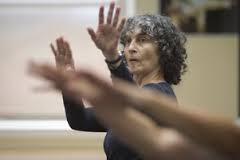
Artist Profile #68: Sara Rudner (New York)
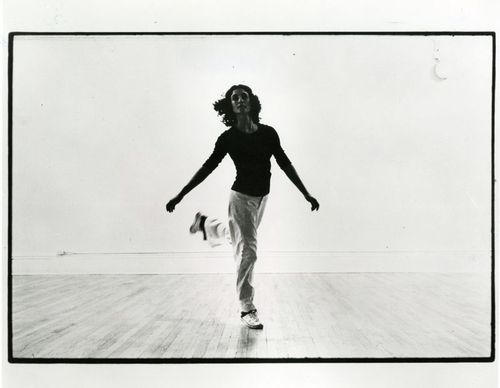
Photo: Nathaniel Tileston
I was born in February 1944, and lived until the age of 17 in Brooklyn, New York, not far from Brooklyn College. I attended Midwood High School from 1956 – 1960; I commuted for a year to Barnard College (located at West 116th Street and Broadway in Manhattan); I moved to Morningside Heights (Columbia University) in Fall of 1961 as a sophomore, and lived two blocks from my studies – no more long commute, no more late arrivals, and no more walking into exams after they had begun. Since then I have domiciled in 14 different apartments and lofts on the island of Manhattan when rents were as low as $35 per month in the mid ‘60s. At 70 years old I have deep roots in the downtown community where I danced, married, raised a son, commuted to my job as Director of Dance at Sarah Lawrence College, and most recently, lived with my beloved, late husband, Christopher Jacob Ritter von Baeyer.
I received a BA degree from Barnard College in 1964, concentrating in Russian History, and a MFA in choreography in 1999 from Bennington College. In between I prepared for my designation as a Master of Fine Arts under the tutelage of Twyla Tharp from 1965 – 1984, and explored and experimented on my own. As of fifteen years ago, I have had a steady “gig” at Sarah Lawrence College that pays the bills while it challenges and enhances my creativity.
While in college I earned money as a lifeguard at a mid-town motor inn that had a rooftop pool, and after graduation I worked in the office of a Bronx slumlord as a file clerk. I also did stints as an office worker for The Free Southern Theater and the Merce Cunningham Dance Foundation while beginning my adventure in dance with Twyla. In, or around, 1970 Twyla Tharp managed to pay dancers a decent wage that allowed us to share living expenses with others, or live in the cheap apartments that were then plentiful in the East Village of New York City. Twyla’s forward thinking, and an occasional dependence on unemployment insurance, allowed all of us to pursue our dreams.
Early years: I found dance early, around the house, in the school yard, and when I was nine years old, with Bella Malinka in the basement of a music school on East 29th Street and Avenue “I” in Brooklyn. Black cotton leotards, naked legs, soft slippers and then pointe shoes at the barre. A “mommy” pianist (her daughter also danced), whose birthday was a few days after mine, played Chopin Waltzes among other selections. When the school closed I stopped studying dance until I encountered modern dance at Barnard College, but I ran and swam.
My 20s: I was 20 years old when I completed my BA degree in 1964. I received my diploma one day, and was in dance class the next instead of beginning the job with the Social Security Administration that awaited me. I began my studies with Paul Sanasardo at his studio on West 21st Street and 6th Avenue in Manhattan that he had established with Donya Feuer. Donya had decamped a few years earlier to Scandinavia to work in dance and film. I also re-visited ballet with Mia Slavenska alongside Paul and other dancers in his company. It was in her studio that I first saw Yvonne Rainer and Deborah Hay among others. Post-modern dancers found ballet. I spent the summer of ’64 at the American Dance Festival at Connecticut College, and danced in a revival of Pearl Lang’s “And Joy is My Witness.” In 1965 I decided that I could not find an essential connection to the dancing I was doing, and returned to college to fulfill requirements that would qualify me to teach in the public schools. But then I met Twyla Tharp through a neighbor, the dancer/choreographer Margaret Jenkins, aka, Margy. I left school and the rest is history. Twyla had already begun her journey, and I was fortunately destined to become a fellow traveler. My first rehearsals with Twyla were in her loft on Franklin Street, downtown NYC, on a soft pine, splintery floor. She suggested I bring shoes, so I brought a pair of saddle shoes. The next nine years were chock full of eye-opening artistic adventures.
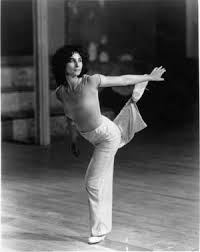
In my 30s: I struck out on my own. I married, I made hour-long birthday solos, created my first dance marathon with Wendy Rogers, Wendy Perron and Risa Jaroslow; made and danced duets with the fabulous Wendy Rogers; formed a dance company, the Sara Rudner Performance Ensemble, made dances, toured in the States and abroad, taught in NYC and at summer residencies. I met Christopher Janney, sound artist, and began a project entitled “HeartBeat,” an ongoing collaboration. In the midst of this activity Twyla asked me to appear with her company again, this time as a guest, when I was available. An opportunity I jumped at. I did double duty working with my own group and dancing with Twyla for a few years, but after a detached retina landed me in the hospital on my back for two and a half weeks and many more in recuperation, it gradually dawned on me that creating programs for proscenium stages (the only work my manager/booking agent was finding for me), had never really interested me, but I was still interested in dancing/performing. So, I shut down the Ensemble and devoted myself full time to Twyla’s new work and repertory until injuries sidelined me at the age of 40. As I was rounding that important corner my then husband and I amicably divorced.
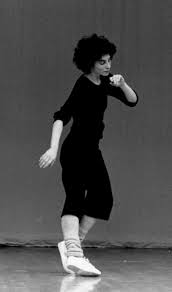
In my 40s: I married, for the second time, and had a child, Edward Eli Marschner. Raising Eli was perhaps the single most important event that helped me redefine my focus and values. I finally saw winter, spring, summer and fall in the playground, on my knees in the sandbox. I did not dance publicly for five years until 1990 until Wendy Rogers invited me to make a dance with her for presentation by Danspace Project. During this decade I also worked with Dana Reitz and Jennifer Tipton on creating “Necessary Weather;” danced in a revival of “Deuce Coupe;” I continued exploring the potential of “HeartBeat;” and made a series of solos for other dancers as well as group dances. At the end of this decade it became clear that my injuries needed serious attention.
In my 50s: I had a total hip replacement. Freedom of movement was once again within my grasp; another divorce and the necessity of supporting Eli and me (with help from Eli’s father) diverted my energies to salaried work in Theater and Opera, and finally led to my MFA studies at Bennington College under the guidance of Terry Creach, Dana Reitz and Susan Sgorbati. At the end of my final year of study, Danspace Project celebrated its 25th anniversary in 1999, and I was invited to participate in the celebration. I chose to create another dance marathon in 1999 this time featuring 20 dancers. I collected material I had been working on for a decade and invited working and former dancers to participate. I also became the Director of Dance at Sarah Lawrence College the same year, which made it possible to maintain my household. I thus began an adventure in education that became a source of inspiration and dancing collaborators.
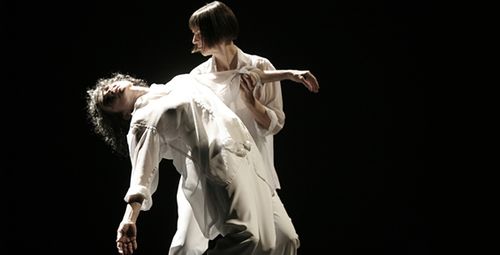
In my 60s: Sarah Lawrence, Sarah Lawrence, Sarah Lawrence, more marathons in NYC, Dublin and Kilkenny, Ireland, Boston and Concord, MA, revivals of “Necessary Weather." Another hip replacement – more dancing and the joy of witnessing Eli begin to fulfill his potential and his dreams.
I am now 70 years old, planning retirement from teaching full time in higher education. I am dancing as I am now, as a maturing being, and enjoying it more and more. I learn new things every day technically and creatively through my current solo practice. But whatever shape my dancing takes, or will take, I remain devoted to Dance as a way of being and knowing.
Some answers:
In general, I look for individuality and passion in a dancer. I care for myself by getting by sleeping at least 7-8 hours every night, I eat consistently and well and avoid junk food (what one eats varies with age). I have studied T’ai Chi and Yoga, both of which have deeply affected my practice. Teaching is one way to notice what your values actually are, and the effort to teach can point out what you need to learn. Teaching also enhances observation, generosity and respect for others and compassion for oneself. Opportunities to work in higher education should always be considered as ways of earning a living and saving for retirement, but there are differences in institutions. In my case, Sarah Lawrence College is where I teach, but my performance and choreographic practices occur outside of the institution. The college generously rewarded me twice in fifteen years to pursue my creative work. I use a computer for communication and research, and I have participated in projects (HeartBeat for one) that use technology to enhance and define the process of creating and presenting dance. But, I have come to understand that we (ourselves, our bodies, minds, and spirits) are the original technology from which all else springs.
Twyla Tharp has created a thorough catalog with photos and videos of her dances. Although the excerpts are short they do represent work that I participated in. The New York Public Library at Lincoln Center, New York, has recordings of some of my work open to public viewing. I believe Twyla’s work is likewise available at the Library.
————————————-
02/21/2015
Artist Profile #86: Linda C. Smith (Salt Lake City, UT)
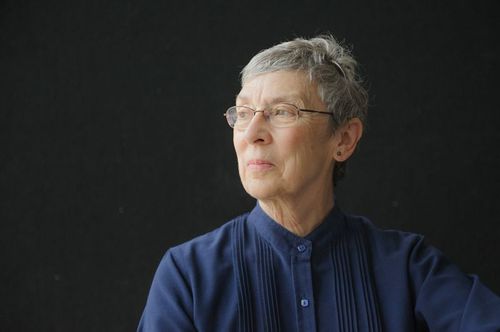
Hometown: Salt Lake City, Utah
Current city: Salt Lake City, Utah
Age: 74
College and degree: BFA in Modern Dance, University of Utah
Website: www.rdtutah.org
How you pay the bills: I am Executive/Artistic Director of Repertory Dance Theatre
All of the dance hats you wear: I direct, teach, lecture, perform, write, fundraise, organize and administrate
Non-dance work you do: I renovate old houses and walk my three dogs
————————–
I had a wonderful introduction to dance at a very early age.
I was born in 1940 on the eve of WW II. My mother saw an article in the newspaper stating that Virginia Tanner was offering creative dance classes for children. She enrolled me in a class taught by “Miss Virginia” held at the McCune School of Music and Art. When you walked in the door of this elegant mansion, you heard a collage of sounds…musicians practicing their scales and opera singers warming up their voices. It was a magical place.
Miss Virginia didn’t teach me a dance. She helped me discover my own dance…one that was inside of me waiting to blossom. She showed me how energy could flow through my spine, open my back and arms, and surge out of every pore in my body. She helped me open my eyes and mind and guided me to understand the connection between nature, movement and self. Dancing helped me understand how the sun could coax a seed to push through the soil, stretch toward the sky and wave in the wind before returning to the earth. Together the class created choreography inspired by the life cycle and my young body tried to embody the spirit of wheat. I was hooked for life. I had found my spiritual center at age four. I spent the next fourteen years developing my craft, performing, choreographing and being introduced to inspiring artists including Helen Tamiris, Doris Humphrey, Martha Graham, José Limón and Merce Cunningham. They are the ghosts that remind me what I need to do…every day.
My 20s:
At age 21, I was invited to join the José Limón Dance Company but decided to finish my college degree. I graduated from the University of Utah in 1964. And then, in 1966, when I was 25, an amazing thing happened. I got a phone call from the Rockefeller Foundation. They invited me to be part of an artistic experiment to help decentralize the arts in America. They wanted to fund a professional dance company dedicated to preserving American dance classics while nurturing new choreography. They thought that dancers should be paid a “living” wage. This was an unbelievable opportunity. I was invited to become a charter member of Repertory Dance Theatre in Salt Lake City, Utah.
30s:
The 1970s was a time of political upheaval, the Vietnam War, a social/sexual revolution, and an artistic revolution. As an RDT dancer in the 1970s, I had a full-time job performing, teaching, and choreographing. The NEA, a new national agency dedicated to the arts, was funding touring and Arts-In-Education initiatives. RDT was on the ground floor of developing outreach/community residency activities. We toured one third of the year traveling to communities large and small all over the U.S. I was given more and more opportunities to administrate, to write and narrate Lecture Demonstrations, to develop AIE activities, to choreograph and work with amazing choreographers including…Anna Sokolow, Douglas Dunn, Viola Faber, John Butler, and Glen Tetley. Modern dance was going through a renaissance.
40s:
In the 1980s, RDT concentrated on developing a “living” historic library of classic dance works. An NEA grant enabled the company to produce “Then…The Early Years” a narrated concert which focused on modern dance created in the first 50 years of the 20th century…Duncan, Shawn, St Denis, Humphrey, Weidman, Holm, Tamiris, Horton. What an amazing learning experience! I became Artistic Director of RDT at age 43. I was still dancing full-time, raising a son, and accepting more and more administrative responsibilities.
50s:
The 1990s offered the challenge of finding a new home for RDT. Hundreds of hours were spent doing feasibility studies, scheduling meetings, gathering information and raising consciousness about the need for alternative performing and rehearsal space for small and mid-sized performing companies in Salt Lake City.
After almost 15 years of work, my dream came true and RDT moved into its new home, the Rose Wagner Performing Arts Center. Two European Tours were icing on the cake. Still dancing but taking on the roles suited to a “mature" body and roles that required less jumping.
60s:
In my 60s, my performing opportunities were more limited to cameo appearances. My life was laced with lots of administrating, organizing, fundraising, grant writing, and worrying about the environment and society. National funding was shrinking, competition exploding in a changing market for “live” dance. I still loved the work. You have to endure challenges and changes…a different kind of creativity was needed to help dance survive. I tried to find ways for dance to play a more relevant part of community life. I gravitated toward community-building activities and found ways to use dance to help address social and environmental issues. Dance should be part of the solution, not part of the problem.
70s:
Now, in my 70s, I’m about to celebrate 50 years with RDT. Wonder where the time went? Challenged by technology and frustrated with society, I still believe in the power of dance and know with certainty that the arts are essential in the life of a healthy community. People sometimes ask when I’m going to retire…as if my life in dance was a job. Dance is a way of life, a gift, and a glorious responsibility. That is what the dance ghosts keep reminding me.
Can you describe a few of the biggest changes in modern dance over the span of your career?
- When RDT was founded, there were only about 150 “professional” dance companies in the U.S. This included modern, ballet, tap, jazz, ballroom, folk and you name it.
- In 1966, when you wanted to record a dance, you raised the money to have it filmed. No video then. Used records and reel to reel tape recorders.
- In 1966, RDT was one of the very few companies in the U.S. that offered dancers a “living” wage…some things never change.
What skills (attributes) do you think a modern dancer needs in 2015?
Patience and tenacity. Forgiveness and flexibility. Be open to the “new” and respect the “old.” You can’t do it alone. Find wonderful and dedicated people to help you achieve artistic success.
What do you look for a dancer?
I look for:
- Educated dancers and prefer they have a college degree.
- Experience and training in a variety of dance languages.
- Strong, clean technique. Because we are a repertory company, we need dancers that can jump, turn and stand on one leg.
- Disciplined, focused, curious and sane dancers with a healthy mind and body.
- Self-motivated dancers.
- Dancers who love team-work, can take criticism and leave their egos at the door.
- Dancers who understand that performing for K-6 graders in a school cafeteria is just as important as performing in legitimate theaters.
- Dancers with generosity and respect for fellow workers.
- With real passion for the art form and an openness to new ideas.
- I look for a “special” quality. Lots of dancers today have technique, but I need to see how they are unique. Dancers need to connect to their inner power and show me their fire, their hunger to move, their wit and creativity.
- I want a dancer to transcend the movement and connect to the mystery. I want them to invite me into their secret spaces. I don’t want to see formulas. I want to see where their dance comes from.
Can you describe a typical week as Artistic Director of RDT?
My responsibilities are both artistic and administrative as I:
- Plan the concerts, the season events, long range artistic plans.
- Develop budgets. Re-work budgets. Cut the budget.
- Work on the schedule for the week, the month, the year…and next year.
- Track the progress of production needs (costumes, lighting, video, music).
- Negotiate with choreographers.
- Develop and track plans with staff, board members, community leaders, other artists.
- Attend dance concerts; watch video; read trade magazines/newspapers.
- Watch /direct rehearsals.
- Council dancers.
- Plan residencies and tours. Communicate with touring sponsors/presenters.
- Track the budget and cash flow; keep eye on Strategic Plan; evaluate all projects.
- Fundraise.
- Write/direct/ perform Lecture Demonstrations. Make speeches.
- Go to meetings. Put out fires. Wonder how to make payroll.
- Work on archive; write, develop goals and artistic concepts for long-range plans..
- Re-work the schedule for the week, the month, the year.
What is on your calendar for 2015?
RDT will celebrate its 50th Anniversary season in 2015-16.
Season concerts will honor our mission to commission new work and preserve historic work. We will pay tribute to our alumni and to Virginia Tanner, the person who inspired the founding of RDT. Choreographers will include: Molissa Fenley, Elisa Monte, Zvi Gotheiner, William (Bill) Evans, Claire Porter, and Joanie Smith. RDT will also perform a concert honoring the 70th anniversary of the José Limón Company by performing Limón’s Missa Brevis and Mazurkas.
How far in advance do you start planning next season’s performances and programs?
Two to three years. RDT has to schedule space in our home theatre at least two years in advance. Funding choreography and touring projects have grant deadlines two-three years out.
For dancers unfamiliar with the dance community in Salt Lake City, can you describe it and all of its manifestations in the city (the companies, performance spaces, Virginia Tanner, high school programs, etc)?
Dance in Utah is amazing. Utah loves dance. It is one of the most important resources in the state. “Why is there so much interest in dance in Utah?’ I have to say, “There were a few tenacious and courageous people with vision. Virginia Tanner is at the top of my list.”
There are outstanding dance departments in the universities that train performers, teachers and choreographers (University of Utah, Brigham Young University, Utah Valley University, Weber State, Southern Utah University, Dixie State University).
There is a K-12 Dance Core Curriculum. Almost every high school has a dance specialist and a growing number of junior highs now have programs.
There are several children's dance companies that have built international reputations. Tanner Dance/ Children’s Dance Theatre founded in the 1940s by Virginia Tanner is known world-wide for its creative dance teaching philosophy. Virginia was instrumental in developing a national AIE program in the 1970s that has nurtured dance all over the country.
Repertory Dance Theatre (the nation’s first successful modern dance repertory company), Ririe-Woodbury Dance Company and Ballet West, are at their 50 year mark.
Many small modern and contemporary dance companies have emerged in the past fifteen years that have enriched the field. It has been said that there are more performing arts companies per-capita in Utah that in any other state.
Public spaces outside the university arena that host dance performances in Salt Lake City include The Capitol Theatre, The Rose Wagner Performing Arts Center, and Kingsbury Hall. Numerous private enterprises have adapted warehouses and churches to accommodate independent and emerging artists.
Salt Lake County supports the arts by levying a one tenth of one percent sales tax that goes to support arts groups. Utah has the oldest State Arts Council in the nation.
Final advice for young dancers:
Enjoy the journey. Be patient. Decide why you love to dance and then just DO IT. Don’t question yourself every day. Just get up and work and work and work.
Dance is for everyone but life as a professional performer is not for everyone. There are so many ways to make dance part of your life. Don’t get stuck. Experience dance on many levels. Teach it, perform it, make it, fund it, watch it, write about it…love it.
————————————-
09/07/2015
Artist Profile #108: Sondra Fraleigh (St. George, UT)
Hometown: Circleville, Utah
Current city: St. George, Utah
Age: 76
College and degree: University of Utah, BS 1962
Graduate school and degree: San Jose State University, 1970. I was around 32 when I finished.
Website: www.eastwestsomatics.com
How you pay the bills: I’m retired with a pension, and I also have my own teaching institute for somatic studies: Eastwest Somatics for Yoga, Dance, and Movement. I teach workshops in St. George, Zion, and many places in the USA, also offering retreats internationally.
All of the dance hats you wear: Director of Eastwest Somatics and writer on dance subjects from 1970 and continuing. I still like to choreograph (inspire and arrange improvisations).
——————————————-
Describe your dance life in your….
20s: Finished dance studies and started teaching at the University of Montana. Was awarded a Fulbright to study with Mary Wigman in Berlin, Germany. Returned home to a job at San Jose State University. Got married and gave birth to a daughter.
30s: Teaching at Brockport State University in NY.
40s: Became chair of dance at Brockport State University in NY.
50s: Became chair of graduate dance studies at Brockport State. Began my teaching institute, independently.
60s: Finished teaching career, continued to write about dance, continued my interest in Butoh. Wrote more on butoh. Took ten students to perform my work in Japan through sponsorship from two universities in Japan. Returned the next year with another work and more students. Taught in Japan. Have taken 11 trips to Japan for teaching and performing. Hope to make this an even 12.
70s: I just finished a book with my advanced students who are also scholars. The book is just published by University of Illinois Press: Moving Consciously: Somatic Transformations through Dance, Yoga, and Touch.

What is on your plate/calendar for fall 2015?
I’m teaching a somatics workshop here in St. George for 5 days in November. Then I teach a retreat workshop at Zion that also features a conference. Call for Presentations is available.
I am finishing two articles for publication in the UK: ”Enacting Embodiment and Blue Muffins” (Blue Muffins is a dance I’m working on that features technology.) and ”Phenomenologies in the Flowing Live Present,” (upcoming). I have two new book chapters coming out, both through edited volumes of Oxford U. Press, ”Love and Power in Butoh, Bausch, and Streb,” and ”A Philosophy of the Improvisational Body.”
Have you always been a writer? Can you talk about the process of writing Dance and The Lived Body?
I liked to write a bit in high school, but didn’t realize I had a flair for it until Joan Woodbury, my teacher at the U (so many will know her) asked me to write an article on dance for the university publication, Pen. She suggested I call it “Words from a Dancer.” I look at it now and see the seeds of phenomenology, writing experience from the first person perspective. She gave me the courage to write. Thank you Joan!
Dance and the Lived Body is a very complex work that was 18 years in the making, incubating and gathering, studying and trying out themes, rewriting, etc. I wrote carefully in the finishing stages, which took about six years of the eighteen. I wrote it without a computer. We didn’t use them so much; technology was just catching up with me. I wrote the entire book in long hand with my puppy by my side.

What is your new book about? How long did it take for you to develop, research, and write it?
Th new book I have mentioned already: Moving Consciously: Somatic Transformations through Dance, Yoga, and Touch.There are nine authors in the book besides me. I wrote the first section, which is about 1/3 of the book, and I edited the rest. All of the writers have studied with me at Eastwest Somatics, and they also offer distinct perspectives through other somatic studies. We aim to be inclusive.
Can you talk about your journey with somatics and developing your own somatic practice and education? Where can people study it?
I love to talk about my journey with somatics, but it is a long story. So in short version, my first somatic studies were through improvisation classes with LaVeve Whetten in Cedar City, Utah and with Joan Woodbury and Shirley Ririe. Improvisation has somatic elements that can be focused on.
I started to study yoga intensively in my 30s. I consider it a somatic study, but teachers have to know how to present it somatically through adaptation so that everyone can be successful, even people who are injured or old. Somatics is for everyone, not just talented movers. At least this is my perspective. I gradually added many somatic modes to my plate: The Feldenkrais Method (I’m certified), The Alexander Technique, Rosen Breathwork, and Craniosacral Therapy. My perspective on transformational dance and yoga is influenced by all of this, including Zen meditation, which I practiced in Japan. Butoh can be taught somatically. I call my work with this Butoh-Influenced Metamorphic Dance. It is "tricky" to be a Western butoh teacher, but fun.
I have written 3 books on butoh. Ahh me – I do keep busy! Have a look at my simple book on creative/somatic yoga: Land to Water Yoga. I love teaching yoga in a dancelike, flowing way.
For anyone wishing to experience my approaches to somatic dance, yoga, and touch – St. George and Zion are not far away. The workshops come in 5-day packages. It takes seven of these to become certified through Eastwest and then you also get certification through ISMETA – International Somatic Movement Education and Therapy Association. Eastwest graduates also qualify for certification through Yoga Alliance.
What keeps you believing in modern dance in 2015?
It stays creative and ever alive to change. I don’t call it "modern dance" anymore however, but I know that this designation still has historical efficacy. I call what is going on now “Contemporary Dance,” and these designations keep changing also. Modern Dance as such is a phenomenon of the Twentieth Century. We have something new now. I wouldn’t even call it postmodern. I did struggle with all of this in writing Dance and the Lived Body. Styles and techniques were changing along with designations even then. Dance and the Lived Body was published in 1987 – and again later.
Last performance you saw that really inspired you:
I continue to be inspired by explorations of my students, especially depth-movement improvisations that I witness in the environment. I like being on both sides of “Authentic Movement,” but I call it “Depth-Movement Dance,” because I’m not fond of the word “Authentic.” All movement, all dance, is authentically what it is.
Final thoughts: Hope/belief/love of the profession:
Wow! I’ve written whole books on my love of dance. It is not a luxury; it is a necessity. My hope is to involve more people in discovery of the dancer in them. I especially like working with those who have no professional aspirations. They seek to heal through dance, and to find joy.
————————————-


Leave a comment